Neon green is an extremely bright green hue that takes after its close color wheel neighbor, lime green. Lime green contains far more red pigment than neon green, while neon green brings just a touch of blue pigment for balance. The hex code for neon green is #39FF14. Promoting vitality with both its shade and its brightness, neon green is best used to add excitement to a design. With hints of blue and red in its base colors, neon green pairs best with pinks that fall in the red violet range in the color wheel. It is better suited as an accent because of its intense vibrancy.
In a RGB color space, hex #39FF14 is made of 22.4% red, 100% green and 7.8% blue. In a CMYK color space, hex #39FF14 is made of 78% cyan, 0% magenta, 92% yellow and 0% black. Everything you need to know about neon green to inspire your next design.
With its brightness and energy, neon green is an intensely vivid and electric hue. This shade sits near green and yellow on the color wheel, embodying vibrancy and modernity. It is distinctly radiant, resembling glowing fluorescent green. Neon green is defined by strong color codes and values that help ensure consistency across digital platforms and devices.
Accessibility considerations play a crucial role in UX and UI design color choices. Figma offers plugins in the Community to make sure your designs meet Web Content Accessibility Guidelines. Here are some ways to incorporate neon green into your project: energize and attract attention, use in gaming and entertainment apps, pair with dark backgrounds for pop, moderate use for highlighting, and design with cultural awareness in mind.
For variations within the same electrifying spectrum, consider Lime Green, Chartreuse, Fluorescent Green, and Electric Lime as related hues. Neon green is very bold, so pairing it with other colors can be tricky. If you want a bright, eye-catching design, pair it with other bold primary colors like electric blues. If using neon green as an accent color, pair it with pinks in the red-violet range to complement the hints of red in its base.
Key color suggestions include Black for grounding contrast, White for crisp luminosity, Royal Blue for regal contrast, and Hot Pink for a bold, energetic combination. Other supporting colors like Navy Blue, Silver, and Coral can broaden the palette for a summer or futuristic vibe. However, some combinations are less harmonious: Burnt Orange, Olive Green, Maroon, Red, and Purple can clash or overwhelm when paired with neon green.
Neon green symbolizes youth, vitality, and cutting-edge technology. Its brightness makes it stand out, representing innovation and forward thinking. Unlike traditional green, which suggests calmness and nature, neon green conveys alertness and energy. Its ability to instantly grab attention makes it ideal for safety gear and high-visibility clothing, signaling warning and caution. In color psychology, neon green shows a two-sided nature: it can boost creativity and energy but may irritate or overstimulate. In UI design, using neon green requires balance to avoid overwhelming users. It can effectively highlight urgent notifications and support leading-edge interaction and design when used with intention and purpose.
The history of neon green began with the discovery of neon gas in 1898 by British chemists William Ramsay and Morris W. Travers, leading to the invention of neon lights by Georges Claude. Initially popular in Paris, neon lights’ distinctive glow became a sensation in America. Neon’s application expanded to signage and safety clothing, enhancing visibility in hazardous settings. In the 1930s and 1940s, neon entered the art world, celebrated by icons like Andy Warhol. By the 1960s, neon's appeal dimmed and was associated with urban decay. Yet artists like Joseph Kosuth and Dan Flavin revitalized neon through installations, marking a neon resurgence in culture. Today, neon colors-especially green-have rebounded in art, fashion, and advertising.
CMYK is the foundation of color printing technology, using four inks-cyan (C), magenta (M), yellow (Y), and black (K). Neon green CMYK is defined here to illustrate how such a vivid hue can be approximated for print: CMYK is (60, 0, 100, 0), translating to an approximate hex code #72BF44 and RGB values of (114, 191, 68). However, it is important to note that the hex and RGB values are approximations since neon greens exist outside the CMYK gamut. The CMYK system’s subtractive nature means it starts with white paper and removes brightness by layering inks, which typically cannot reproduce the same level of light emission as RGB displays.
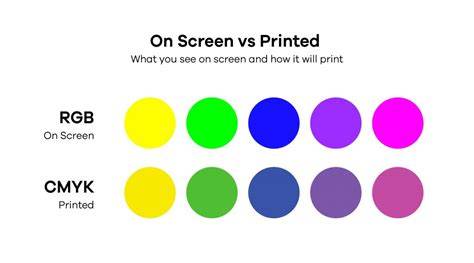
In practice, neon colors are difficult to reproduce exactly in CMYK printing, and results can appear muted or different from on-screen previews. White print typically requires special processes beyond standard CMYK printing, as white is the absence of ink on paper rather than a printed color. The color accuracy of neon greens on print will depend on paper stock, ink formulations, and printer capabilities, and color matching may be approximate rather than exact.
Neon Green CMYK comes alive through a spectrum of shades, tints, and tones, each offering a variation of this regal color. Explore the versatile Neon Green CMYK color palettes, including Complementary, Analogous, Split-Complementary, Triadic, Tetradic, and Square schemes. Discover patterns such as Gingham Checks, Vertical Waves, Polka Dots, Leaves, and Flowers that can incorporate neon green in print or digital art.
What is the difference between RGB and CMYK?
In summary, neon green is a bold, attention-grabbing color that excels as an accent or highlight in design, particularly in digital contexts. Its print reproduction requires careful consideration of CMYK limitations and paper stock, with realistic expectations about exact color matching. Designers often rely on a digital-to-print workflow that anticipates these differences and uses approximations or spot colors to achieve the closest possible outcome.
| Aspect | RGB | CMYK | Notes |
|---|---|---|---|
| Base neon green | 0-255 red, 255 green, 14 blue | Approx 60c, 0m, 100y, 0k | High brightness; print approximations vary |
| Typical hex | #39FF14 | Approx #72BF44 | Screen vs print gap |
| Usage | Accent, CTA, high energy | Careful balancing with backgrounds | Avoid overload |