Learn how to utilize Substance 3D Painter to simplify and superpower your 3D workflow in this free hour-long workshop. This workflow will allow you to interactively paint and layer materials on your 3D model to make it look however you want.
Thanks to Michael Tanzillo, the Head of 3D Technical Artists at Adobe Substance 3D for giving us a great introduction to the software, including some tips on workflow with Autodesk Maya. Keep an eye on our social media platforms for upcoming webinars, blog posts, and new courses.
Michael Tanzillo has worked in the animation and VFX industries for nearly two decades. He spent over a decade at Blue Sky Studios as a lighting artist and technical director, culminating in a role as Head of Training. Animation Mentor offers mentor-led workshops in many animation-related career paths, including 3D Character Modeling, Character Design, and Digital Painting. You can check out the full list of workshops here. At the core of Animation Mentor are our 3D Character Animation and Game Animation programs.
Overview of Substance 3D Painter
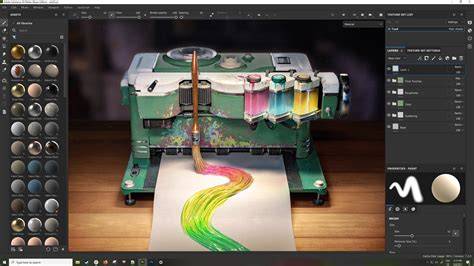
Substance 3D Painter provides a robust set of tools for painting textures directly onto 3D models. It supports real-time materials, smart materials, and procedural maps that adapt to complex geometry. The interface is designed to streamline the painting process, enabling artists to preview results on the fly and quickly iterate on look development. The software integrates well with major 3D packages and supports standard file formats for textures, making it a versatile choice for beginners expanding into professional pipelines.
Key Features for Beginners
- Interactive painting on 3D models with real-time preview
- Smart materials and generators that adapt to surface details
- Layered texture workflow with non-destructive editing
- Masking, blending modes, and procedurally driven maps
- Export presets for common engines and renderers
Starting a Simple Workflow
Begin by importing your 3D model into Painter and setting up a first base material. Use layers to build up color, roughness, metallic, and normal maps. Leverage smart materials to quickly achieve realistic wear, dirt, or weathering. Apply masks to restrict edits to specific regions, then refine the look by adjusting opacity and blending modes. Finally, export the texture sets compatible with your rendering engine or game pipeline.
Integration with Autodesk Maya
Workflow tips with Autodesk Maya include importing textured models and using Painter-produced textures in Maya for shading and rendering. The combination of Painter's painting capabilities with Maya's powerful scene management can accelerate asset creation and iteration cycles. Use standard export formats to ensure smooth transfer of maps and materials between applications.
Practical Steps for a Beginner Workshop
- Set up a new project and import a clean 3D model.
- Apply a base material and create your first paint layer.
- Use smart materials to simulate complex surface properties quickly.
- Mask areas to create localized edits and add layers for detail.
- Preview changes in real time and iterate until satisfied.
- Export texture sets for your target renderer or game engine.
Throughout the session, focus on fundamental concepts such as color balance, material roughness, and normal map influence. As you gain familiarity, experiment with layers, stacking order, and procedural elements to achieve more nuanced results. Remember to save progressively and organize your texture sets to align with your project’s naming conventions and render pipeline.
Further Learning and Community Resources
Follow industry professionals and platforms for ongoing education in 3D art. Workshops and mentor-led programs can provide structured learning paths for 3D Character Modeling, Character Design, and Digital Painting. Explore additional courses and keep up with updates in Substance 3D tooling to stay current with best practices and new features.