Generative AI has completely taken over in the last couple of years. Midjourney is still one of the strongest tools for taste-first image generation and remains hard to beat when a recognizable visual aesthetic is your priority. This article ranks several notable alternatives and highlights where they excel, as well as where Midjourney continues to excel.
1) GPT Image 1.5 on EvoLink
GPT Image 1.5 on EvoLink starts at $0.0125/image, while Midjourney V7 on EvoLink starts at $0.0375/request and official Midjourney subscriptions start at $10/month. In practice, all six tools in this list are stronger fits for API-style workflows than a subscription-led Midjourney plan comparison. None of these models is a perfect style clone. It is better for precise edits, text-heavy assets, and instruction-following workflows. Midjourney is still better when you want a distinct, taste-driven visual identity.
2) Stable Diffusion
Think of Stable Diffusion less as a single app and more as a raw engine. It's an open-source model, which means you have complete freedom. Pricing: Free to download and run on your own machine. This openness makes it a foundational option for developers who want to tailor generation to exact needs and build API-driven workflows.
3) Nano Banana 2
Nano Banana 2 starts at $0.028/image on EvoLink. It belongs to the cluster of API-first tools that can be cost-effective at scale while offering useful customization for programmatic generation and automation workflows.
4) Seedream 4.5
Seedream 4.5 starts at $0.03/image on EvoLink. It competes in the same category of affordable, programmable image generation with an emphasis on efficient, high-throughput outputs for dynamic pipelines.
5) Z-Image Turbo
Z-Image Turbo starts at $0.0036/image on EvoLink, which is dramatically lower than the other models in this list. This makes it a compelling option for large volumes or rapid prototyping where price per render matters most.
6) Other notable alternatives and ecosystem considerations
In practice, these six tools are strong fits for API-style workflows and for teams looking to avoid a subscription-centric model. They are not perfect style clones; they tend to excel in precise edits, text-heavy assets, or instruction-following tasks. Midjourney remains the go-to for a distinct, taste-driven identity with cinematic and painterly aesthetics.
Generative AI has broadened beyond image synthesis to support many business workflows. For example, eesel demonstrates how AI can improve support queues by simulating resolutions before live deployment, turning image-generation tools into practical workflow automations rather than just creative generators.
AI image generation tools are being used across industries-from education to marketing, product design to game development. The right choice depends on the specific use case, whether you want quick concept art, precise branding assets, or a highly customizable design system fed by your own data.
Comparative insights: Midjourney vs. DALL·E 3 vs. ChatGPT image capabilities
Midjourney delivers stunning, artistic visuals with a distinctive aesthetic, excellent for mood and storytelling. DALL·E 3 is more literal and easier to access in familiar ecosystems, offering strong prompt fidelity, inpainting, and robust text rendering in some contexts. ChatGPT image generation (GPT-4o / GPT Image 1.5/2.0 family) enables native image creation and editing within conversational flows, often providing better text in images and tight integration with other tasks in a single chat. The choice depends on whether you prioritize artistic character, prompt fidelity, or workflow integration.
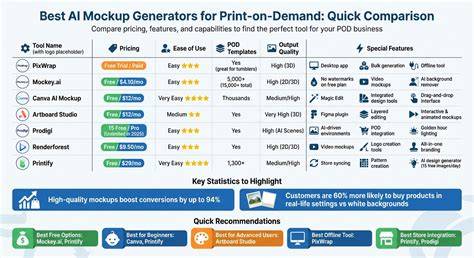
Illustrative comparison of models, pricing, and integration across platforms.
| Tool | Strengths | Pricing note |
|---|---|---|
| Midjourney | High-end artistic style, mood, prompt versatility, powerful editing toolkit | Tiered subscriptions; no free tier |
| DALL·E 3 | Literal prompt interpretation, strong text rendering, inpainting | Free in ChatGPT, paid options via API |
| ChatGPT image (GPT-4o/2.x) | Conversational generation, editing within chat, memory of style | Free limits; Plus/Team/Enterprise for higher usage |
| Stable Diffusion | Open source, local control, full customization | Free to download; run locally or via cloud |
| GPT Image 1.5 on EvoLink | API-friendly, cost-efficient per image | Starts at $0.0125/image |
| Z-Image Turbo | Very low per-image cost | Starts at $0.0036/image |
In practice, most teams benefit from a mix: use a model with strong stylistic capabilities for concept art (Midjourney) and another with robust text rendering or API accessibility for workflows (DALL·E 3, Stable Diffusion, or GPT Image variants). The overall trend is that pricing per render and per API call, integration with existing toolchains, and memory of preferences become decisive when choosing a primary workflow tool.
For those starting out, Playground AI remains an intuitive design editor with a clean interface and templates, while Canadian platforms like Canva AI Image Generator and Adobe Firefly offer strong ecosystem integrations and enterprise-grade features. If your goal is typography-friendly in-image text, Ideogram has addressed a common pain point by delivering more reliable textual results. Microsoft Bing Image Creator and its model options provide free access with straightforward usage within a browser, ideal for quick exploratory visuals.
Practical guidance: choosing the right tool for your needs
- If you need a recognizable, cinematic visual identity and are comfortable with a learning curve, Midjourney is hard to beat.
- If you want tighter integration with existing AI tools (especially OpenAI's ecosystem) and easier prompting, DALL·E 3 via ChatGPT or Bing may be preferable.
- If budget, API integration, or running models locally matters, Stable Diffusion or EvoLink-based options offer cost-effective, customizable routes.
- If you require high-volume generation for product visuals or mockups, consider low-cost options like Z-Image Turbo and Nano Banana 2, especially within automated pipelines.
In the end, the best choice depends on your use case: mood-driven storytelling visuals, branding and product mockups, or scalable automated design workflows. My recommendation is to experiment with one or two options that align with your most frequent tasks, then expand as needed to cover broader creative requirements. The landscape is large, and the best tool for you is the one that fits your workflow, budget, and desired level of creative control.
tags: #better #than #midjourney