The Bracero Program was created by executive order in 1942 to address labor shortages on the home front during World War II. The United States concluded a temporary intergovernmental agreement for the use of Mexican agricultural labor on United States farms (officially referred to as the Mexican Farm Labor Program), and the influx of legal temporary Mexican workers began.
In 1942, the president announced the creation of what would become the largest program of Mexican migrant workers in U.S. history. The Bracero Program grew out of a series of bi-lateral agreements between Mexico and the United States that allowed millions of Mexican men to come to the United States to work on short-term, primarily agricultural labor contracts.
During World War II, the Sonoma County area faced a desperate labor shortage as soldiers were overseas, and Japanese-Americans who had provided much of the agricultural workforce were interned. Talmadge “Babe” Wood was likely the first Sonoma County rancher to bring in Braceros-125 men contracted to pick hops, pears, prunes, and apples on the Wood family’s River Road ranch. Following the program’s mandates, Wood established a “campground” along Mark West Creek with tents, cots, a community kitchen, a cook, a dedicated well, and a swimming hole in the creek.
The Braceros were legal workers, as part of an agreement between the United States and Mexico. The program was designed with safeguards intended to protect both Mexican and domestic workers-such as guaranteed payment of at least the prevailing area wage, employment for three-fourths of the contract period, adequate housing, decent meals, occupational insurance, and free transportation back to Mexico at the end of the contract. In practice, these protections were often ignored, and both Mexican and native workers suffered while growers benefited from plentiful, cheap labor.
The Bracero Program can be divided into three distinct stages: 1942-47, 1947-54, and 1955-64. The program began as a bilateral effort to fill urgent labor needs in agriculture and related industries; farmers argued that World War II would bring labor shortages for low-paying tasks. The railroad Bracero program, a companion to the agricultural program, involved over 100,000 contracts signed between 1943 and 1945 to recruit Mexican workers for railroad employment, and it remained notable for its more direct alignment with original government intentions than its agricultural counterpart. The Tracks North is the only book-length study devoted to the railroad bracero program.
Over time, political and economic dynamics altered the program’s implementation. The program was formalized by Public Law 78 during the Korean conflict, and entry into law helped shape how labor contracts were administered. Yet, producers and workers alike often bypassed the program’s provisions: employers sought cheap labor, and workers sought employment, sometimes at wages below fair standards. The Act and subsequent enforcement created a complex web of labor relations, with some protections for workers on paper, but limited enforcement in practice. The result was a “broken” immigration system that persists in various forms today.
Historically, Mexican migration to the United States has been the world's largest sustained movement of migratory workers in the twentieth century. This migration pattern emerged from shifting labor demands, wartime exigencies, and evolving policy frameworks. Mexican consular reports, labor records, and contemporary newspapers document the gradual expansion and eventual contraction of Bracero exchanges, as well as the social and economic impacts on families and communities on both sides of the border. The Bracero Program concluded on December 31, 1964, as mechanization and other labor practices reduced the demand for migrant labor in its traditional forms.
The program’s legacy extends beyond economics into culture and social movements. The Bracero experience helped catalyze the farmworkers’ movement, contributing to the rise of unions and greater public attention to labor rights in agriculture. Art, literature, and oral histories captured the indignities and resilience of Bracero workers, offering a human perspective on a policy that shaped generations. In the context of this broader history, the Bracero Program is studied not only as a labor mechanism but as a lens on race, citizenship, gender, and the family in mid- to late-twentieth-century America.
Scholars emphasize that the Bracero Program was born from a political commitment to facilitate wartime production while maintaining racialized labor hierarchies and border controls. The agreement sought to protect workers and their families, but enforcement gaps, exploitative practices, and the use of Braceros as strikebreakers reveal the tensions between policy goals and labor realities. As a result, the program remains a fulcrum for debates on immigration policy, guest worker programs, and the ethics of migrant labor in modern economies.
In addition to agricultural labor, the Bracero Program also touched rural communities and infrastructure projects, including the railroads. The railroad bracero program is widely cited as an instructive model of binational cooperation that operated within the spirit of the original negotiations, yet it faced significant challenges and ended with a policy shift aimed at safeguarding domestic workers and reworking labor arrangements. The Tracks North highlights the railroad bracero experience as a remarkable historical case of cross-border labor mobility conducted under bilateral terms that were ultimately terminated by the U.S. government.
Today, the Bracero Program remains a critical chapter in American history, informing contemporary debates about immigration policy and guest worker programs. Its legacy is preserved in archives, oral histories, and museum exhibits that document the lives of migrant workers, the communities that hosted them, and the complex relationships between labor, race, and national policy. The Bracero History Archive, a collaborative project involving the Smithsonian, Brown University, and other institutions, continues to collect and share artifacts, documents, and testimonies that illuminate this pivotal historical phenomenon.
Images, documents, and artifacts from the Bracero Program contribute to our understanding of migrant labor in both Mexico and the United States, enriching our knowledge of immigration, citizenship, nationalism, agriculture, labor practices, race relations, gender, sexuality, family, visual culture, and the Cold War era. The term “Bracero” itself-derived from brazos, meaning strong arms-signifies the emphasis on physical labor and resilience. This history is not merely about contracts and wages; it is about the people behind the contracts-their hopes, sacrifices, and enduring influence on American society and Mexican communities alike.
Today, there are ongoing conversations about new guest worker proposals and immigration reform, with the Bracero Program often cited as a reference point. Museums, universities, and cultural institutions continue to present and interpret Bracero stories, including exhibitions and first-person narratives that connect contemporary audiences with the lived experiences of Bracero workers and their families. In California’s Valley communities and beyond, descendants and local artists keep the memory alive through art, education, and community dialogue, helping to ensure that these histories of labor, migration, and resilience remain part of the national conversation.
Infographic suggestion: a timeline of the Bracero Program highlighting key policy changes, contract terms, and major events.
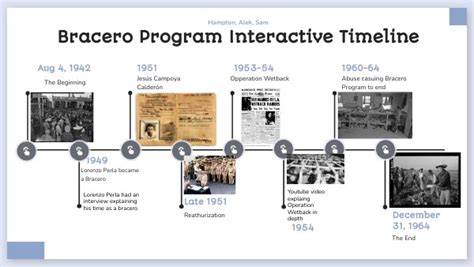
In examining the broader literature, scholars such as Fernando Saúl Alanís Enciso and Barbara A. summarize early labor shortages, government policy decisions, and the social consequences of the program. The program’s history includes a series of bilateral commitments aimed at harmonizing labor needs with human rights considerations, yet its implementation often diverged from stated protections-creating a lasting tension between the ideals of fair labor and the realities of market-driven migration.
Ultimately, Bracero stories-individuals’ journeys, family separations, and communities’ adaptation-illustrate the human cost and resilience embedded in this era of migration. As contemporary policymakers consider new forms of guest worker arrangements, the Bracero Program remains a key historical reference for evaluating the potential benefits and pitfalls of cross-border labor agreements.