The institution was created by decree No. 3049 of June 11, 1985 and has no owners, shareholders, or profit motives. Its foundation arose from the aspirations of a group of people interested in advancing education, who in 1984 decided to develop an educational project capable of offering the community an active learning alternative through innovation and pedagogical quality with participatory performance grounded in transcendent principles and values. From the outset, priority was given to the professionalization of in-service teachers, offering them updated, high-level academic training through reflective accompaniment, from an integral and innovative perspective aligned with the curricular proposal with which they aimed to begin.
Over the years, the school has benefited from advisory and collaboration from various experts, including John de Abate, Ph. C., a Costa Rican psychologist, followed by Lic. Nora R. De Chacón, a psychopedagogue also from that country, and later many national and international experts who have worked on multiple programs and workshops. Among them, the school’s trajectory highlights the approach supported by international and local expertise, reinforcing its educational experiments and curricula.
The Leonardo Da Vinci School is a municipal educational establishment, whose sponsor is the Corporación de Educación y Salud de Las Condes. It was created in 1992 under the name Colegio Experimental Artístico Las Condes. Located in an urban residential sector of the Las Condes commune, in the city of Santiago. Beginning in 2001, it became an educational establishment with the Scientific-Humanist modality, maintaining the 4th Grade of Secondary Education only for that year under the Experimental Artístico modality. In 2002, all its courses joined that modality, with emphasis on artistic fields, considering in its Plans and Programs a significant number of sub-sectors and workshops in Auditory and Visual areas.
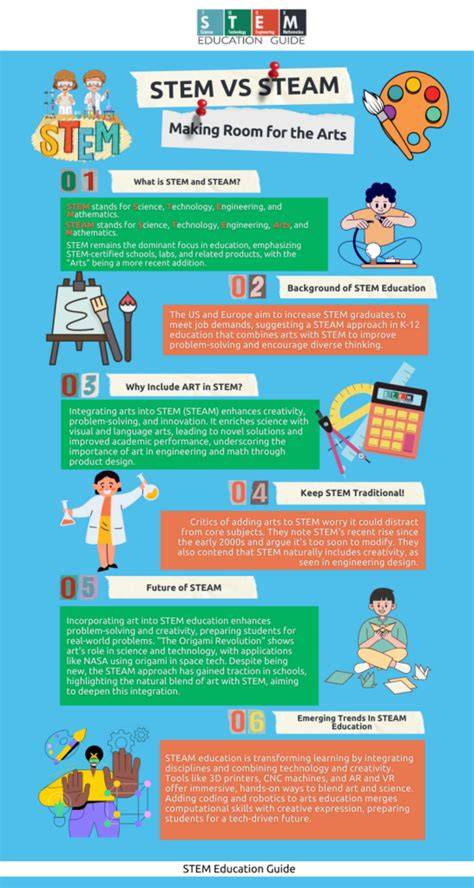
On June 30, 2003, by Exempt Resolution Nº 2400, the establishment changed its name to Colegio Leonardo Da Vinci de Las Condes. Finally, in 2019 the school received STEAM accreditation from the Center for Educational Innovation (CEI) in New York, consolidating a pedagogical approach that integrally combines the school’s corporate values with scientific-humanist training and the school’s artistic sello.
Curricular Offer and Additional Programs
- Basic Curricular Areas Required by the Ministry of Education, from Early Level (one year completed) to 6th grade of Secondary Education.
- Baccalaureate General and Technical Specialization in Informatics with Extended Schedule.
Our curricular proposal is based on developing human competencies across several dimensions. Human competencies foster the development of cognitive, emotional, social, artistic, and creative intelligences, as well as transcendent values. We operate on an extended schedule that allows us to broaden the time allocated to each subject and to offer extracurricular activities. The institution is legally declared as a non-profit organization under Decree 3049. The school is considered a model among private educational institutions in Santiago, offering multilingual training and promoting itself as a reflexive and self-critical learning community according to its institutional vision.
Exterior view and events
In recent years, the school’s prestige faced challenges following the death of a student during a school excursion, which raised concerns about safety protocols and supervision in recreational activities. Despite the incident, the center’s authorities issued a statement expressing condolences to the family and indicated they would not speak further to avoid interfering with investigations. The case sparked calls for greater transparency from society. The family has requested complete audiovisual material and authorities have faced scrutiny over access to security footage tied to the incident, prompting discussions about the handling of evidence and accountability.
Contemporary context and mission
The college offers an integral and high-quality education from preschool to secondary education. The project is grounded in a humanistic thinking that values human beings in all inherent aspects, beginning with respect for life and the rights derived from it. We aim to promote a pluralistic vision of the world, recognizing the diversity of society in cultural, social, and religious dimensions. We believe in the capabilities and potential of every human being, fostering a community of learning that is reflective and self-critical. Do you need information from our administration or finance department?
Key Milestones and Curricular Focus
The institution’s evolution reflects a shift from a philanthropic educational project to a formal municipal school with a strong emphasis on STEAM. Its accreditation by a prominent international center underscores a commitment to integrating scientific-humanist values with artistic expression. The extended schedule supports broader learning opportunities, including multidisciplinary subfields in the visual and auditory arts, which align with the school’s artistic and technological emphasis.
Adapted transition through the years demonstrates responsiveness to educational demands while maintaining a core focus on reflective and holistic learning. The school positions itself as a multilingual, inclusive community that emphasizes continuous professional development for educators and active student participation in learning processes.
Educational philosophy and community impact
The institution’s philosophy centers on developing competencies across cognitive, emotional, social, artistic, and creative domains, anchored in transcendent values. This holistic approach fosters critical thinking, collaboration, creativity, and responsible citizenship while preparing students for higher education and diverse career paths in a global context. The ongoing dialogue around safety and transparency remains an important facet of maintaining trust with families and the broader community.