MacPaint is a raster graphics editor developed by Apple Computer and released alongside the original Macintosh personal computer on January 24, 1984. It was sold bundled with its word processing counterpart, MacWrite, for US$195. MacPaint was notable because it could generate graphics that could be used by other applications.
When Atkinson transitioned to the Macintosh team, he brought LisaGraf with him, renaming it QuickDraw for the new platform. QuickDraw’s speed and versatility made it the perfect engine for a new drawing application. Atkinson began adapting SketchPad for the Macintosh in early 1983, initially calling it MacSketch.
MacSketch evolved into MacPaint by July 1983, marking a significant shift in design and functionality. The original MacPaint was programmed as a single-document interface, with an immovable window and unalterable palette positions and sizes. The FatBits editing mode offered a unique magnification approach, displaying each pixel as a clickable rectangle with a white border and providing a double zoom function that set a standard for many future editors.
MacPaint’s development featured two offscreen memory buffers to avoid flicker when dragging shapes or images: one buffer contained the current document pixels, and the other contained the previous state, the basis for the undo feature. The software’s double buffers enabled smooth drawing and editing on the limited hardware of early Macintosh systems.
Early MacPaint introduced a “Goodies” menu including FatBits, and it was first advertised in an 18-page brochure in December 1983, ahead of the Macintosh release. The Macintosh debuted on January 24, 1984, with MacPaint and MacWrite bundled together. The original MacPaint shipped alongside MacWrite, demonstrating Apple’s integrated approach to graphical and textual work on the new platform.
MacPaint inspired a wave of clones and similar drawing programs for Apple II and IBM PC platforms within a year and a half. Notable successors and equivalents included Broderbund’s Dazzle Draw for the Apple II, Mouse Systems’ PCPaint for the PC, and IBM’s Color Paint for the IBM PCjr. An unofficial update by Mac Aspect called MacPaint X appeared as a donationware beta for Mac OS X in 2008, illustrating the enduring interest in the classic drawing paradigm.
MacPaint’s legacy extended into later Mac software architecture. LisaGraf evolved into QuickDraw, which became the backbone for many bitmap graphics tasks on the early Macintosh. Susan Kare, Apple’s bitmap artist, contributed iconic interface elements to MacPaint, including tool icons like paintbrush and lasso, which helped make the program approachable for novice users. Kare’s work on the Chicago system font and other icons also shaped the Macintosh’s distinctive visual language.
Over time, MacPaint’s code and ideas influenced subsequent graphic editors, and the history of MacPaint is closely tied to the evolution of Apple’s graphical user interface, drawing tools, and the broader landscape of early personal computing graphics.
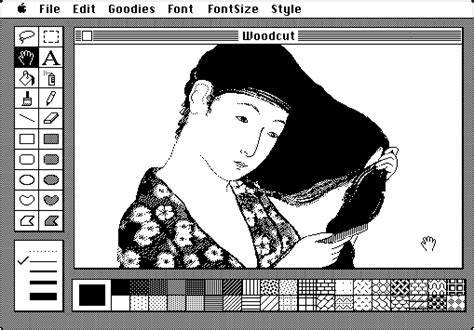
In the modern era, Paint X emerges as a contemporary painting application for macOS that emphasizes realistic digital brushes-watercolor, crayon, and calligraphy textures-along with straightforward usability and ongoing bug fixes. The evolution from MacPaint’s pixel-based painting to current digital brushes reflects a long arc of innovation in raster graphics tools on Macintosh systems.
Paint X continues the lineage of accessible drawing software on macOS, focusing on user-friendly controls and expressive brush simulations while maintaining a lightweight footprint suitable for users who want quick results without a steep learning curve.
Macintosh Apple event 1984 | Showing off MacPaint and MacWrite
- Sketch to MacPaint transition and interface changes
- Two offscreen buffers enabling smooth dragging and undo
- MacPaint’s influence on later raster editors and interface design
Today’s macOS drawing programs build on the same core concepts: bitmap-based painting, immediate visual feedback, and accessible tool palettes that support creative exploration across various styles and media simulations. The story of MacPaint illustrates how early design decisions-such as fixed palettes, pixel-level editing, and real-time rendering-gave rise to flexible, modern painting experiences that users enjoy across generations of Apple hardware.