In the realm of anime editing, Twixtor has become a powerful tool for creating smooth slow-motion sequences and dramatic cuts within One Piece footage. This article compiles observations from the supplied draft topics, focusing on how editors apply Twixtor to iconic scenes and characters such as Zoro, Luffy, Nico Robin, Shanks, and others, across various arcs, fights, and live-action potential concepts.
Overview: What Twixtor brings to One Piece footage
Twixtor is a frame interpolation technique that generates new frames between existing ones, resulting in ultra-smooth slow-motion effects. When applied to One Piece clips, it enables editors to:
- Highlight pivotal moments in battles, such as Luffy vs. Lucci or Zoro’s decisive swordwork, by elongating impact frames without losing motion fidelity.
- Create cinematic pacing for intense exchanges, enabling viewers to absorb choreography and emotion frame by frame.
- Blend or simulate live-action vibes for hypothetical adaptations, like “Op Live Action” style sequences, while preserving recognizable character motion.
Character-focused Twixtor applications
Editors frequently pair character-centric motifs with Twixtor to emphasize signature moves and transformations. Examples from the draft topics include:
- Zoro Twixtor sequences: blade slashes, Tista-like quick stabs, and dramatic fall-aways after clashes with foes.
- Luffy Twixtor sequences: Gear transformations, “badass” poses, and high-intensity clashes that benefit from extended impact frames.
- Nico Robin and Boa Hancock Twixtor sequences: graceful, precise hand movements and subtle expressions during combat or dialogue-driven moments.
- Shanks, Kid, and other key rivals: stylized exchanges that exploit extended timing to heighten aura and tension.
Story arcs and episode-specific examples
The draft references numerous arc- and episode-based ensembles that editors might explore with Twixtor. While not reproducing the exact material, we can infer practical applications for each motif:
- Episode-centric clashes (for instance, “episode 1114” or “episode 1113”) could leverage Twixtor to frame pivotal strikes, crowd reactions, and decisive endings.
- Raw fight clips (e.g., “Clips Raw” across episodes like 1104, 1108, and 1104) provide dense action data where frame interpolation can maintain momentum while slowing key sequences for reader engagement.
- Character-driven confrontations (e.g., Luffy vs. Rob Lucci, Sanji vs. Luffy, or Katakuri duels) benefit from slowed, motion-retained choreography to highlight technique and strategy.
Practical workflows for One Piece Twixtor edits
To achieve high-quality Twixtor results on One Piece footage, editors commonly adopt a balanced workflow:
- Source optimization: reduce noise, correct exposure, and stabilize footage prior to interpolation to minimize artifacts.
- Motion analysis: identify fast-action beats and key frames where acceleration changes occur, ensuring Twixtor maintains realism.
- Layered edits: combine Twixtor frames with traditional cut pacing to preserve rhythm and narrative clarity.
- Color and grading: adjust color consistency across interpolated frames to avoid jarring shifts during slow-motion sequences.
- Quality checks: review for ghosting, artifacts, and unnatural motion, refining with masking or selective interpolation where needed.
Creative considerations: live-action vibes and fan edits
The idea of “Op Live Action” style sequences signals a trend toward cinematic realism in fan edits. Twixtor enables:
- Realistic weight and momentum in character movements, making fantastical abilities feel physically grounded.
- Smoother reactions in reaction shots, amplifying emotional beats without sacrificing the fluidity of the original animation.
- Seamless integration of multiple clip sources-fight fragments, power glimpses, and dramatic pauses-into a cohesive narrative rhythm.
Infographics and visual aids
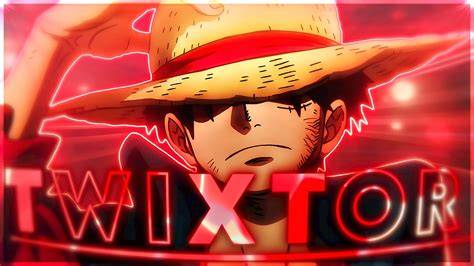
Infographics can help illustrate the effects of Twixtor on a sample One Piece fight beat, showing frame counts before and after interpolation, motion vectors, and artifact mitigation steps.
Embedded media ideas
Suggested video concepts for enhanced understanding include tutorials on frame interpolation best practices and side-by-side comparisons of raw versus Twixtor-enhanced clips.
Data-rich insights: sample montage concepts from the draft
Table ideas for a companion dataset could include episodes, characters, action types, and observed interpolation outcomes. This section can be adapted to present a compact matrix of how different characters benefit from Twixtor in various fight scenes.
Ключевые элементы для режиссёрской руки: качество, стиль, и баланс
The balance between motion smoothness and preserving the dynamic punch of a scene is essential. Editors must decide when Twixtor enhances comprehension and when it risks smoothing away the crisp impact that fans expect from One Piece battles.