This War of Mine: Final Cut is a remastered, content-packed edition that keeps the core weight of the original while expanding its emotional and narrative reach through DLCs and Stories expansions. The Final Cut package interweaves a harsh, grounded portrayal of civilian survival in war with accessible, if relentlessly somber, strategic gameplay. The experience can be deeply personal, informed by real-world conflicts and the intimate strains of family and morale under siege.
Core premise, gameplay loop, and structural design
In This War of Mine you do not play as an elite soldier; you control a group of civilians trying to survive in a besieged city, struggling with a lack of food, medicine and constant danger from snipers and hostile scavengers. The day-night cycle drives the entire experience: during the day, survivors stay indoors to craft, trade, and tend to health, while at night one or more characters venture out to scavenge for supplies. The risk-reward calculus is constant, with raids, raiders, and depression all pressing on your shelter’s stability. The game’s randomization ensures that “one run” never quite duplicates the last, emphasizing emergent stories and evolving survival challenges.
During the day you focus on maintaining your hideout: crafting items, upgrading facilities, and managing morale. Beds, ovens, heaters, and workbenches all contribute to long-term resilience, while stockpiling food and medicine keeps fear and fatigue at bay. At night you must decide who to send out, where to go, and how to balance the chance of finding crucial resources against the risk of losing a survivor. The map’s locations, the people you meet, and the loot you uncover are all procedurally varied, ensuring that shelter management and scavenging feel like two sides of a single survival coin.
Crafting, trading, and guarding the camp are central to the experience. You can later craft or purchase weapons, but the game emphasizes deterrence and careful movement over gung-ho combat. Deteriorating security and increased raid risk heighten the need for barricades and vigilant night-watch, while winter drives heaters, fuel collection, and food stockpiles to the forefront. The survival loop is complemented by the purely human dimension: conversations, morale, depression, and the potential to disrupt sleep or daily routines with emotional pressures.
Stories and The Little Ones DLC: narrative threads that shape play
The Final Cut bundles in all post-release content plus new material in The Little Ones DLC, which introduces child survivors into the roster. These children cannot defend themselves, which creates additional emotional pressure and strategic constraints, heightening the moral weight of every decision. The three Stories expansions-Father’s Promise, The Last Broadcast, and Fading Embers-offer more guided, character-focused experiences that differ from the base game’s open-ended survival loop. Stories tend to feel more tightly scripted, delivering intimate character arcs and higher emotional stakes.
The Little Ones and Father’s Promise are highlighted as especially impactful in terms of emotional resonance. In Father’s Promise, the goal becomes aiding a father in locating his daughter, Amelia, which fosters a deeper attachment to individual survivors and adds a clear, personal mission to the day-night cycle. The Stories DLCs provide distinct narrative frames while keeping the core survival mechanics intact, illustrating how This War of Mine can be experienced as both a broad tactical challenge and a set of human-centered anecdotes.
Visuals, sound, and presentation: a somber, purposeful aesthetics
Graphically, Final Cut presents a striking, muted, nearly grayscale palette with a charcoal-stylized aesthetic. The visuals emphasize bleakness and decay while keeping clarity on the map layout, interaction points, and potential routes. The lighting, sound ripples, and vision cones support careful planning, inviting players to study environments before advancing. The writing and animations contribute to believable survivor interactions, especially in parent-child dynamics, while the child characters from The Little Ones DLC can intensify emotional responses as they despair or demand attention.
The ambient audio leans on distant gunfire and artillery, with a melancholic daytime score that becomes dynamic during scavenging nights. The soundtrack swells in response to threats, reinforcing the tension of each nocturnal raid. This pairing of art and audio reinforces the game’s thematic focus: survival under existential threat, rendered with a stark, artful sensibility.
Controls, accessibility, and player experience across platforms
Although Final Cut is built on console ports released in 2016, the game was originally designed around mouse or touch input. The gamepad feels most effective during scavenging runs, combat, or quick movements, but the bulk of playtime occurs in the shelter where micromanagement of multiple survivors, building, and crafting dominates. Interaction icons proliferate as you expand your shelter, which can complicate precise control at times. It’s easy to trigger mis-taps or cancel actions unintentionally, especially when guiding children through interactions.
Presentation-wise, the game remains approachable for a survival-title genre, with simple crafting menus, clear item descriptions, and periodic survivor bios that reflect evolving needs and concerns. The final cut’s remaster adds 4K visuals, remastered locations, and a refined UI, enhancing readability and immersion without altering the core gameplay loop. While some players may wish for even more tutorial guidance or more forgiving early runs, the learning curve is consistent with the game’s emphasis on strategic resource management and morality under duress.
Emotional impact, morality, and replayability
What stands out about This War of Mine: Final Cut is its unequivocal focus on civilian suffering and the moral complexity of survival decisions. Choices such as raiding a vulnerable neighbor or stealing from civilians test ethics under pressure, highlighting how moral compasses bend when basic needs become scarce. The game’s conclusion can vary, with multiple endings for each survivor depending on decisions and path taken, reinforcing a sense that there are no easy answers in war-torn survival.
Replayability remains strong due to randomized survivors, shelter layouts, and the time-to-ceasefire variability. Each run presents a fresh blend of threats, opportunities, and interpersonal dynamics, ensuring that no two playthroughs are identical. The addition of The Stories DLCs shifts the balance toward narrative focus, offering emotionally resonant arcs that can feel more personal than the base game’s broad survival goals, while still demanding rigorous resource management and strategic thinking.
A note on era, context, and influence
Although the game’s setting is fictional, its scenarios draw inspiration from documented wartime conditions and atrocities, notably during the Siege of Sarajevo. This grounding lends weight to the emotional impact and elevates the title beyond conventional survival games. Thematically, the game’s focus on civilian experience-rather than frontline combat-sets This War of Mine apart in a crowded genre, inviting players to confront the human cost of war through a deeply personal lens.
Final Cut is available on modern consoles and continues to be a potent, emotionally charged survival experience. The edition’s enhancements-blended with the DLC and Story expansions-make it the most comprehensive way to experience This War of Mine to date, offering new scenarios, remastered visuals, and a broader narrative spectrum that underscores the title’s anti-war message and its enduring relevance in today’s world.
What critics and players say
Reviews frequently praise the game’s emotional resonance, bleak atmosphere, and moral depth, while occasionally noting the grim commitment required and the lack of traditional “fun.” Critics describe it as a clever inversion of survival tropes, a cautionary tale about the costs of war, and a game that teaches through consequence rather than spectacle. The consensus is that This War of Mine: Final Cut represents the mature culmination of a game that challenges you to think about survival and humanity in equal measure, making it essential for audiences seeking a reflective and impactful experience.
- Remastered visuals, complete DLC packaging, and new scenarios amplify the original experience.
- Story-focused expansions deepen attachment to characters and moral dilemmas.
- Open-ended survival feel balanced by narrative-driven modes.
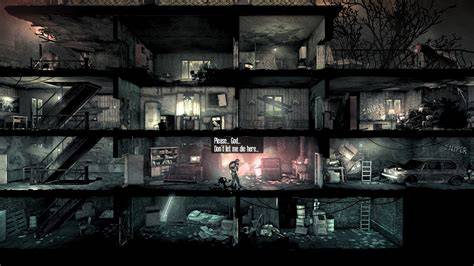
This War of Mine - Still Worth it in 2026? (Review)
If you’ve played the original and crave new angles on the same brutal core, Final Cut offers enough scope to justify revisiting Pogoren’s besieged streets. If you’re new to the title, Final Cut provides a comprehensive entry point with its integrated DLCs and refined presentation, delivering a deeply human survival experience that remains relevant amid ongoing global conflicts.