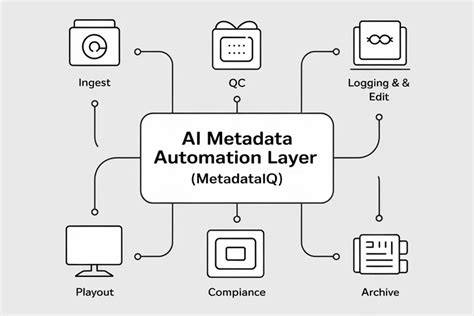
Think of your company’s data like a massive airport. Flights (data) are constantly landing from every direction: cloud platforms, SaaS tools, APIs, and internal pipelines. That’s what operating without metadata management feels like. Metadata management tools have evolved far beyond static catalogs, organizing, governing, and automating metadata across an organization’s data systems while integrating business and technical metadata into a unified repository for visibility and trust in enterprise data. Modern metadata management tools connect cloud, on-premise, and SaaS environments, enabling scalable, hybrid governance, real-time harvesting, and support for everything from regulatory compliance to AI model transparency.
Why metadata management is indispensable in 2026
Most enterprises now manage data across multiple clouds, SaaS tools, internal databases, and real-time pipelines. Metadata chaos quickly follows when teams don’t know what data exists, where it lives, or how it’s used. Regulations like GDPR, CCPA, and HIPAA require proof of data control, and metadata tools enable that control by tracking lineage, mapping data ownership, and enforcing policies. AI models need trusted, well-documented, and bias-aware data; metadata management tracks the origin of model inputs, monitors feature usage, and ensures explainability, which is crucial for the ethical and regulatory use of AI. When metadata is well-managed, business users don’t have to chase down IT to find data, and teams spend less time hunting for data, avoiding outdated or duplicate datasets, and reducing manual documentation.
As enterprise data stacks stretch across clouds, platforms, and APIs, the need for centralized metadata management becomes urgent. The platform should connect seamlessly to your full data ecosystem-cloud data warehouses (e.g., Snowflake, BigQuery), BI tools (Power BI, Tableau), data pipelines (Fivetran, dbt), and APIs from SaaS apps; manual metadata entry won’t scale. Next-gen platforms use AI to go beyond automation, with features like NLP-based search, asset recommendations, anomaly detection, and pattern recognition. Effective governance requires more than catalogs, and as metadata volumes grow, performance matters: multi-domain ingestion, concurrent users, and frequent crawls must be handled without slowing down. A great tool works for both technical and non-technical users, with a UI that supports clarity, searchability, and self-service capabilities. Pricing and deployment should align with your infrastructure and budget, whether SaaS, on-prem, or hybrid, with costs based on users, assets, or features.
Leading tool categories and how they fit your maturity
With dozens of tools on the market, the choice often depends on whether you need discovery, governance, or end-to-end platform capabilities. Standalone metadata management tools like Collibra and Alation excel when governance is the primary objective and regulatory complexity is high, while BI-first or integrated platforms like Domo embed metadata directly into analytics and applications to accelerate time-to-value.
Open-source vs. enterprise-grade platforms present two paths: open-source tools like DataHub or Amundsen are popular with engineering-led teams, whereas enterprise platforms like OvalEdge are designed for broader organizational use. In reality, many organizations evolve from discovery to full-stack governance, reflecting their metadata maturity and architectural needs. A metadata tool won’t magically solve data chaos; success hinges on aligning the platform with people, processes, and goals. Without data owners or stewards, metadata becomes stale; involve business users from day one and map glossary terms to business language. Start with a few core systems and scale outward, auditing connector maturity rather than chasing sheer quantity.
- Integrated platforms (e.g., Domo) embed metadata into data products, enabling real-time governance in dashboards, experiments, and AI-powered analytics.
- Standalone platforms (e.g., Collibra, Alation) emphasize governance rigor, lineage, and policy management for enterprise-scale compliance.
- Open-source options (e.g., DataHub, Amundsen) appeal to engineering-led teams prioritizing flexibility and cost.
What to look for in metadata management tools
Modern metadata tools should combine business and technical metadata in one system, provide lineage visibility across pipelines and dashboards, embed governance and security context, enable discovery and reuse for non-technical users, and support automation aligned with BI, app development, and AI initiatives. When evaluating tools, consider integration depth with BI, ETL, and analytics tools; suitability for business users versus technical teams; automation and active metadata capabilities; governance simplicity; scalability for cross-domain ingestion and user concurrency; and total cost of ownership including deployment mode and licensing.
Agentic AI metadata: turning passive catalogs into active governance
Agentic AI metadata management transcends static catalogs by making metadata an active, self-optimizing governance fabric. Capabilities include autonomous discovery and data classification, continuous lineage and impact analysis, policy-aware actions, intelligent enrichment, closed-loop quality, and measurable enterprise outcomes. This approach yields faster time-to-data, reduced incident MTTR, lower compliance drift, and increased trust and adoption of data products and AI initiatives. Features to seek include an active metadata graph with event buses, ML/NLP for auto-tagging and PII detection, cross-plane lineage, a policy engine with data access workflows, quality and observability hooks, open connectors to Snowflake, Databricks, BigQuery, Kafka, dbt, Airflow, and governance artifacts such as glossaries and certifications.
Implementation patterns and governance
Adopt a phased rollout, starting with connectors to warehouses, lakehouses, ETL pipelines, and BI tools; establish baseline lineage; then enrich metadata with PII tagging and semantic relationships. Build trust with KPI dashboards, policy enforcement, and CI/CD schema gates. Use a lightweight governance model with tag custodians and a steward network, and track metrics like percentage of assets with required tags, spend attributed to cost centers, and the volume of canonical values vs. aliases. Iterate based on real retrieval behavior and operational signals such as cost allocation gaps, compliance reporting gaps, and inventory ambiguity.
Real-world use cases and outcomes
Agentic AI metadata management delivers tangible value across industries: Finance-SOX/CCAR lineage and model risk traceability; Healthcare-HIPAA tagging and PHI segmentation; Retail-product and customer 360 with consent-aware activation; SaaS/data teams-schema change guards and contract testing. Across these scenarios, metadata enrichment turns static catalogs into actionable intelligence, reducing risk, accelerating insights, and increasing trust in data powering business decisions.
Implementation blueprint: a 90-day plan
- Phase 1 (Weeks 1-3): Connector rollout and baseline visibility. Deploy connectors to warehouses, lakehouses, ETL pipelines, and BI tools. Enable auto-discovery and establish baseline lineage for critical data flows.
- Phase 2 (Weeks 4-7): Metadata enrichment and trust building. Apply PII tagging, map glossaries, establish semantic relationships, and generate trust scores for high-quality assets.
- Phase 3 (Weeks 8-12): Agentic policies and KPI dashboards. Implement access control, quality enforcement, and compliance monitoring; integrate schema gates; launch dashboards tracking discovery time, certified assets, and policy hits.
Security, compliance, and risk controls
Embed security and governance into data operations to reduce risk while maintaining agility. Features to consider include automated DPIA and record-keeping, least-privilege access with audit trails, and region-aware residency with data masking. In practice, these controls foster compliant, scalable AI and analytics initiatives.
Data tagging strategy for enterprise data
A strong tagging strategy optimizes retrieval quality and supports automation, not just cataloging. Anchor tags to outcomes owned by finance, security, and operations; define a minimal, enforceable tag set; map local dialects to enterprise tags; enforce at creation time with policy gates and templates; automate routine tagging while reserving review for risky cases; and keep governance lightweight with clear ownership and measurable metrics. Iterate based on retrieval behavior and operational signals to maintain durability as the organization evolves.
Vendor landscape highlights
Choosing between integrated platforms and standalone tools depends on where metadata delivers value. Integrated platforms excel when BI speed and embedded analytics matter, while standalone catalogs serve governance and regulatory needs. Open-source solutions suit engineering-led teams, while enterprise platforms emphasize enterprise-grade governance, scalability, and user adoption. The best choice is context-specific, focusing on how metadata will be used day-to-day within analytics workflows and governance processes.
What the data landscape looks like in 2026
Metadata management is increasingly an execution layer for analytics and AI. Real-time, autonomous metadata capabilities enable compliant, trustworthy, and scalable data operations. The market continues to mature toward augmented metadata maturity, where autonomous orchestration, proactive governance, and deep integration across the data stack drive measurable business outcomes. As organizations pursue self-service analytics and AI-driven decision-making, embedded metadata becomes a foundational driver of speed, trust, and efficiency.