There is a common fascination with grand-sounding titles, and yet the real question remains: who has the authority to approve a purchase and who merely influences the decision? This article delves into how procurement-related titles are used in organizations, how they relate to actual buying power, and how sales professionals can identify the true decision-makers when engaging in new business.
First impressions of lofty titles and their meaning
I recently received a call from a prospective client who informed me, early on, that they were the "First Vice Chair" of the association that they represent. I have to say that I was impressed. I'm sure you would be also; a title such as "First Vice Chair" sounds terribly important. If we can get past the verbiage, I have to ask: What, exactly, is a First Vice Chair? It sounds to me like the job title of an executioner, for reasons that I cannot readily explain. Power titles like this one must surely be created to intimidate speakers and sales trainers.
To be candid, I also do not understand the meaning of the numbers. There is always a Second Vice Chair, if there is a First. What does the Second Vice Chair do that is subservient to the First Vice Chair? Is the job of the Second Vice Chair to "second" everything that the First Vice Chair says - in other words, to what some would describe as a "suck-up"?
As you can see, I am easily befuddled by titles. Some types of businesses are more prone to bestowing important-sounding titles than others. Take banking, for example. I don't think that I have ever met a single employee at any level of a bank who doesn't have the words "Vice President" somewhere on their business card. From the janitor to that Bank of America guy who wanted a $40 million bonus in bailout money, everyone is "Vice President" of something. My sources in the banking profession tell me (privately) that acquiring increasingly fancy titles often takes the place of being paid more money. No wonder, then, that we have First Vice President, Second Vice President, Assistant Vice President, Assistant First Vice President - everything, it seems, except a plain old ordinary Vice President. Find this one, and you've accomplished something.
Strategic entry: choosing the right initial contact
In developing new business, sales people need to take care to ensure that the titles of the people they are calling on are likely to be directly involved in the decision process. Care should be taken when selecting an appropriate level for your initial contact. Too often, a poor choice can result in stopping an otherwise excellent selling opportunity before it ever gets started.
Below are three job titles of important people who are often assumed to be decision-makers, yet may not have the direct authority to release funds without higher approval. Use good judgment when making these individuals your first stop in the decision process.
1. Purchasing and Procurement Managers
There are a lot of sales people who make a living (usually a poor one) by calling almost exclusively on purchasing agents. Most sales people, in fact, assume that purchasing managers in companies make buying decisions. In reality, this is often simply not the case. The purchasing manager's role is to procure products and services at the request and direction of other people higher up in the organization. In other words, it is not the purchasing manager that needs your company's product or service, but someone else higher in the company. That is where the need originated, and, at least with significant purchases, that is where the decision is made. Therefore, the actual need, and the perception of value, rests at a higher level.
Since the purchasing manager has no personal vested interest whatsoever in what you are selling (after all, they won't be the ones using it), perception of value is all but removed from the factors considered in the purchase at this level. Consequently, they often want the least expensive option, so that they can meet their responsibility of shaving expenses. This is not to belittle this position; they have an important role in any company. However, if you want to sell value, you are usually wasting your time in purchasing. You must gain access to those in the organization with the vested interest in what you are selling.
2. Human Resources
In many cases, this is a difficult route when it comes to buying decisions. HR Directors play a critical and high-value role in all aspects of employee management and development. That role can, but sometimes does not, carry over to the power to buy. As a marketer of sales training services, you might think that I sell to HR departments on a regular basis. In fact, I can count on one hand the number of HR executives that have ever been involved in hiring me. Further, only one HR executive out of that group had the final authority to do so; she has become an executive buyer based more on her demonstrated skill in the company than her job title. Human Resources executives are great people, and their department is an area where people in my business spend a great deal of quality post-decision time. In most cases, this should occur after you have identified and gained access to the individuals who have buying authority for the products and services that you sell.
3. Engineering
This is a complex group to sell to. In a technical sale, the Senior Engineer usually does not have final approval authority, yet often controls the buying decision. In fact, if your senior technical contact wants to do business with you, the deal is almost as "sold" as if you had the commitment from the decision-maker. Why? Because the CEO usually does not have the technical depth of expertise to challenge the recommendation of the Senior Engineer. Ever watch Star Trek? Name one episode - just one - where Captain Kirk overruled Mr. Spock's recommendation. Get the idea? With engineer types, once Mr. (or Mrs.) Spock buys into your recommendation, Captain Kirk will surely follow. In the corporate-training side of my business, this is the Vice President of Sales and Marketing; yours is the resident executive with the expertise in what you are selling.
When it comes to titles, learn to recognize the difference between friends and buying authority.
Practical takeaways for procurement-focused selling
- Identify the true decision-makers by tracing the need to the higher level in the organization, not just the surface title.
- Recognize that some roles, like Purchasing or HR, may influence but not finalize purchasing decisions.
- Value-focused selling often requires access to the executive sponsor or senior technical buyer, who can provide the credibility needed to close.
- Use appropriate initial contact levels to maximize chances of advancing opportunities rather than getting stuck at a non-decision-maker.
In this landscape, the key is to separate titles from actual authority. When you understand where the need originates and who ultimately approves a purchase, you can tailor your approach to align with the real buying authority, whether that be a senior engineer, an HR executive, or a high-ranking leader in procurement or operations. The art is in recognizing the buying center and engaging the right voices at the right time.
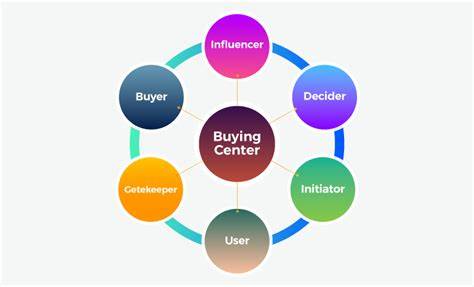
How to Get in Contact With the Decision Maker of a Large Company
tags: #figma #procurement #decision #maker #titles