The Blackmagic Design URSA Cine 17K represents a new threshold in large-sensor cinema, pushing both resolution and physical footprint into uncharted territory. This article collects observations on the camera’s size implications, lens ecosystem, workflow considerations, and practical realities for production teams eyeing 65mm-class performance.
Sensor size and its implications
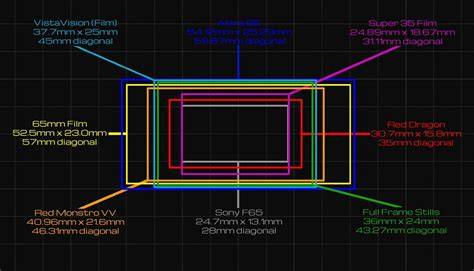
What does a large sensor imply? The lens image circle is big. In the case of the URSA Cine 17K you have an image circle of 55.9mm, or 56mm rounded out. For larger apertures, the lenses will be even bigger than their 35mm equivalents. We’re talking bucket-size lenses here. Zooms? The center and corner performances of the lenses must be stellar. Any imperfections will be blown up at 17K. If you’ve seen IMAX in a large dome screen you’ll understand. Poor makeup will be instantly visible. DOF will be shallower, and pulling focus will be a nightmare.
Comparisons and competing ecosystems
The Arri Alexa 65 has two fans. Arri has a few lenses available for the Alexa 65, like Prime DNA, Prime 65, Prime 65 S and Vintage 765. There are rehoused Hasselblad and Mamiya lenses. However, you won’t find a single one on B&H or regular stores. Some full frame cine lenses might cover the 65mm sensor, but only at certain focal lengths. Also, just because they cover the sensor doesn’t mean they’ll deliver the best quality. This is the first big problem any buyer is going to face. The other major problem is that only LPL and Hasselblad mounts (H, XCD or V?) are available. You’ll be needing the LPL mount or be restricted to Hasselblad glass. I don’t think the mount can be XCD, because those lenses don’t cover the full 65mm sensor.
Lens strategy and adaptors
What about the flange focal distance? Due to the smaller flange focal distance of the LPL mount most lenses can be adapted. The Mamiya 645 lenses should give the best value for money. There is another issue with these lenses, and that’s not because of the size, but the resolution of the URSA Cine 17K. The Arri Alexa 65 is only 6K, but at 17K, you have to ask yourself: Which lenses can even resolve this resolution? Both these manufacturers offer still lenses designed for 100 Megapixels. 17K is 140 Megapixels. You are looking at the most expensive lenses on the planet for commercial photography. This by itself isn’t a big deal, but you’ll have to understand you’re going to be using a 6×6 matte box and filters (the most expensive, largest and heaviest possible).
Workflow, data and monitoring considerations
Also let’s not forget the data rates that you might have to face. If the URSA 12K is anything to go by, you’ll be looking at about 1.5 or more GB/s! Then you have to add a couple or three graphic cards or more (the most expensive kind) like the Nvidia RTX 4090 to even playback and grade 17K on your workstation. And of course, there’s no monitor that can play back or even accept 17K via any SDI or HDMI protocol, so I have no clue how you’re going to realistically study your footage at 17K. They said they have designed this camera ground up. It doesn’t look like that. Good luck trying to fit all this into a decent budget and workflow.
Use cases and practical adoption
I’m excited for a 65mm camera, and this is a true 65mm sensor. The single most exclusive use-case for this camera is the VFX, Sports and Wildlife industries, as you get 17K plates that you can crop into. Why? Even if I could get my hands on the camera, where are the lens options? How am I going to grade this behemoth of a footage? It’s obviously for someone who can pay for an Alexa 65. So why wouldn’t they go with a camera that already is a proven ecosystem?
Mitigation and roadmap for rollout
Tie up with a lens manufacturer to produce a set of 65mm lenses in the LPL mount upon camera availability. An LPL to PL mount with drop-in filters. Improvements in Davinci Resolve to handle an Optimized version of this codec written as a sidecar, so no proxies need to be made. Anyway, maybe Blackmagic Design will iron out some of these issues by the time the camera is released. I’m sure if it is a powerhouse camera the lenses and workflow will eventually sort itself out.
Summary of practical takeaways
- Expect a 56mm image circle with a need for very large, bucket-size lenses at 17K resolution.
- Lens options are currently limited by LPL and Hasselblad mounts; plan adaptors or a dedicated lens strategy early.
- High-resolution capability demands top-tier optics, heavy matte boxes, and costly filtration setups.
- Data rates will be extremely high, necessitating powerful storage, GPU-backed workflows, and robust monitoring solutions.
- Realistic 17K study requires future-proof monitors and possibly sidecar codec optimizations to avoid proxies.
In the end, the URSA Cine 17K marks a bold step toward true 65mm-class digital capture, with all the accompanying size, cost, and workflow challenges. The path to practical production will depend on lens ecosystems, workflow optimizations, and hardware innovation that keeps pace with this high-res vision.