3D Gaussian Splatting emerges as a promising advancement in scene representation for real-time rendering and novel view synthesis. Unlike traditional methods that rely on structured grids or neural volumetric primitives, this technique uses the flexibility of 3D Gaussians to efficiently model complex scenes. The rasterization engine integrates a fast, differentiable path that supports backpropagation of gradients for optimization and learning tasks.
Foundations: Gaussians as Primitives and the Rasterization Goal
A 3D Gaussian is defined by its position, a 3x3 covariance matrix, and an opacity value. When projected onto a 2D image plane, these blobs contribute color and transparency to pixels. To render them efficiently, the approach uses a tile-based rasterizer that partitions the screen into 16x16 tiles and processes Gaussian contributions per tile. This enables fast sorting, culling against the view frustum, and accumulation per pixel in a front-to-back order during the forward pass.
Key to the technique is the representation of covariance with a diagonal scaling matrix S and a rotation matrix R, described analytically through quaternions. This allows independent optimization of blob size, shape, and orientation, facilitating compact scene representations with anisotropic Gaussians.
Optimization Pipeline: From SfM to Dense Gaussian Fields
Optimization aims to craft a dense assembly of Gaussians that closely represent a scene for free-view synthesis. Structure from Motion (SfM) initialization provides a good starting point by reconstructing a sparse 3D point cloud and camera poses from 2D images. Gradient descent then fits Gaussian parameters to minimize a loss that combines L1 and structural similarity (D-SSIM) components, guiding positions, covariances, and opacities toward an accurate scene approximation.
Adaptive densification follows a warm-up phase: after initialization, the system densifies every 100 iterations, cloning small Gaussians in under-reconstructed regions and splitting large Gaussians in high-variance zones. This dynamic management controls the total Gaussian count while preserving representation quality. Sparse Gaussians are pruned over time by removing those with near-transparent opacity, balancing fidelity and efficiency.
Fast Differentiable Rasterizer: Depth-Sorted Rendering and Gradients
The fast differentiable rasterizer centers on a tile-based approach that enables scalable rendering without rigid limits on the number of splats. Each Gaussian is assigned to a subset of tiles it overlaps, with a key that encodes its view-space depth and tile ID. A global, GPU-accelerated Radix sort orders Gaussians by these keys, after which each tile is processed by a dedicated thread block that loads relevant Gaussians into shared memory.
For each pixel, colors and opacities accumulate front-to-back. The forward pass saturates opacity when it reaches 1, at which point processing can stop for that path. The backward pass traverses per-tile lists from back-to-front, computing gradients by dividing the intermediate opacities by each Gaussians’ own alpha. This framework allows an unlimited number of blended primitives to receive gradient updates, accommodating depth complexity without needing fixed parameter tuning.
Handling Non-Idealities: Artefacts, Memory, and Limitations
Despite substantial improvements, several challenges remain. Artefacts such as elongated or splotchy Gaussians can appear in difficult scenes; popping artifacts may arise in regions with limited view coverage or during large Gaussian creation. Guard bands and visibility heuristics mitigate extreme positions but cannot eliminate all depth-blending instabilities. Antialiasing is not yet implemented, leaving room for improvement in depth and blending changes.
GPU memory usage, although more compact than dense volumetric approaches, can peak over 20 GB during training for large scenes. Memory efficiency remains an active area for refinement, especially as scene complexity scales.
Mathematical and Miscellaneous Details
Spherical Harmonics (SH) are used to represent directional lighting components in a compact form, enabling efficient evaluation of lighting in the radiance field. SH coefficients approximate scene illumination across directions, contributing to realistic shading without excessive computation. The combination of SH-based lighting with anisotropic Gaussians provides a balance between visual fidelity and rendering speed.
Operational notes include practical guidelines for running experiments in environments like Google Colab, including CUDA setup, PyTorch compatibility, and how to manage SfM data and subsequent training. While the pipeline is sophisticated, it remains designed for real-time applicability and rapid iteration on research ideas.
Architectural Snapshot: From SfM to Real-Time Rendering
Starting from a sparse SfM point cloud, the optimization process uses a fast tile-based renderer to generate a set of 3D Gaussians. Their density is adaptively controlled to capture scene structure efficiently. The pipeline includes SfM initialization, gradient-based parameter optimization, and adaptive densification to refine coverage where needed. The final render uses a differentiable rasterizer to enable end-to-end learning and scene refinement.
Updated Considerations for Practical Use
To run complex scenes, practitioners often need to manage platform-specific considerations and ensure compatibility between CUDA versions, PyTorch builds, and GPU capabilities. In practice, the workflow emphasizes a lean rendering kernel, careful culling, and efficient memory management to keep real-time performance feasible on modern GPUs.
Visual Aids and Computational Aids
Images, diagrams, and demonstration videos can illuminate the structure of Gaussian splatting, the tile-based rasterizer, and the optimization dynamics. The article can include illustrative figures showing the Gaussian blob in 3D space, the tile grid partitioning, and the depth-sorted rendering order. A short visualization video can demonstrate how Gaussians accumulate per pixel, how gradients propagate, and how adaptive densification evolves during optimization.
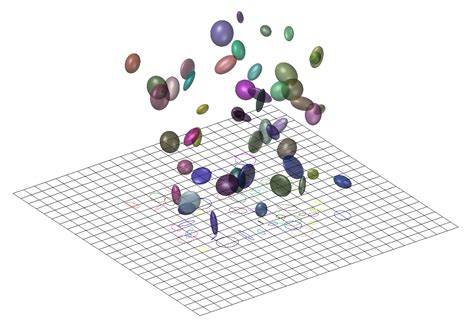
3D Gaussian Splatting - Why Graphics Will Never Be The Same
Practical Takeaways: What Diff Gaussian Rasterization Enables
Diff Gaussian rasterization enables fast, differentiable rendering of complex scenes with radiance fields represented by 3D Gaussians. The approach supports automatic optimization of geometry, efficient back-propagation of gradients, and scalable rendering through a tile-based, depth-ordered rasterizer. While limitations remain in artefact handling and memory usage, ongoing refinements point toward increasingly capable real-time rendering of dynamic scenes with learned representations.
| Aspect | Details |
|---|---|
| Representation | 3D Gaussians with positions, covariance, opacity |
| Rendering | Tile-based rasterizer, 16x16 tiles, depth-sorted, per-pixel accumulation |
| Optimization | SfM initialization, gradient descent, adaptive densification |
| Lighting | Spherical Harmonics for directional lighting |
| Limitations | Artefacts, popping, lack of antialiasing, high memory usage |
tags: #diff #gaussian #rasterization