In a world where T-Mobile acquires Sprint, Disney acquires 21st Century Entertainment, and Activision acquires Blizzard, it seemed like Adobe had a chance to acquire Figma.
Adobe, known for its popular suite of software in the creative and design industry, announced in September 2022 that they had agreed to acquire Figma, a collaborative design web application that has become the top pick among users across the globe.
The two companies have been working with regulators for over a year to turn this opportunity into a reality.
But it hasn’t all been smooth sailing. That’s why many people were surprised when yesterday marked the termination of Adobe’s $20 billion acquisition of Figma.
What happened, and what does this mean for their users?
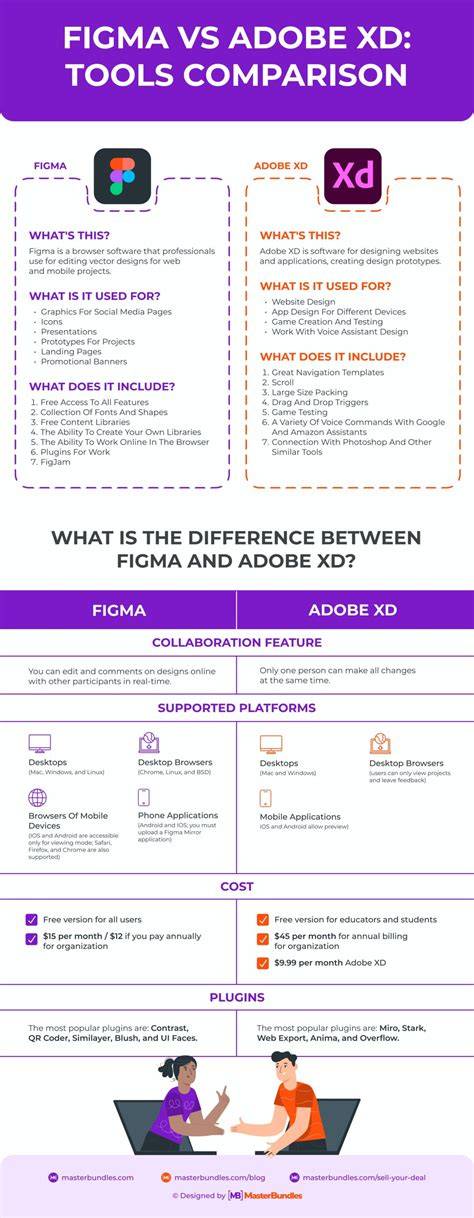
For many professionals, Adobe was their introduction to creative software. However, users faced a common hurdle with Adobe products: the lack of synchronous editing capabilities. Only one person could edit an Illustrator or Photoshop file at once.
When Figma released in 2016, their web-based application solved these collaboration challenges by enabling designers to synchronously work on the same file while saving their progress to the cloud.
For many users, the news of the failed acquisition brings relief. It was clear a year ago that the Figma community had their complaints about an acquisition. Commenters flocked to Reddit to air their concerns.
Figma offers a free option and is permanently free for students and educators, while Adobe offers brief trials before requiring users to pay a monthly fee.
For their more popular programs, like Photoshop and Illustrator, that fee is $22.99 monthly, a bit steeper than Figma’s $12 monthly fee per editor, which includes unlimited Figma files.
Needless to say, Figma’s more affordable pricing plan and superior collaborative features made it a strong competitor.
Adobe’s suite of products suffers complaints for issues like crashing, requiring constant updates, and lacking an autosave feature, frequently resulting in hours of lost work.
Another complaint about Adobe is that its monopoly on the creative market eventually ceases innovation in its acquired products. Once a product is consumed by the parent, it tends to become bloated with features, leading to slow performance and frequent crashes.
Designers speculated that Figma would eventually cease to exist, as Adobe would likely absorb its features into its own UX/UI software program, XD. Users speculated that Figma would fill the gaps that XD wasn’t able to bring to the market.
Adobe and Figma are going their separate ways, independently, after a year of scrutiny with the DOJ, European Commission, and UK Competition and Markets Authority (CMA).
A similar event occurred in 2022 when Meta was forced by the UK CMA to sell off their recent acquisition of Giphy. The reasoning behind the order was competition concerns in the UK social media and display advertising markets, in which Meta controlled about half of the latter.
Ultimately, Adobe couldn’t agree to the CMA’s remedies to their regulatory concerns. After an anti-trust probe, the CMA suggested Adobe sell Figma Design, the core offering from Figma, as it had “overlapping operations” with Adobe’s XD application.
Based on the initial negative reactions to the announced acquisition, users won’t be missing out on a future where Figma and Adobe are one company. However, Figma was optimistic about their future working with Adobe.
For starters, Adobe has garnered a vast subscriber base for its suite of tools. For example, Adobe’s generative AI engine, Firefly, could’ve quickly enhanced visuals within Figma. Or a Figma prototype could easily transfer to an After Effects file to use in an animation.
Let’s not forget Figma’s latest creation, FigJam, a collaborative whiteboarding tool that provides designers with a digital space to brainstorm ideas.
It’s not all over - at least, not yet. The CMA and Adobe have a hearing scheduled on December 21st, which is also the deadline for Adobe to offer remediations. But there is still hope for the future.
Figma continues to make advancements in its offerings, introducing new features in the past year like Dev Mode, variables, and AI features in FigJam.
As for the direction Adobe is headed, the future is still uncertain. Would they continue searching the market for a smaller competitor to Figma to potentially acquire? That might ease regulators’ concerns by leaving Figma alone.
Regardless of what ends up happening, users shouldn’t put too much weight into their tooling. The tools that you use to create are just tools.
The article notes that the app allows multiple users to edit the same design simultaneously. Prototype mode creates interactive flows between frames and screens so that users can test UX, link frames to simulate navigation and set interactions like "On click" or "While hovering".
In May 2025 at Figma Config 2025, Figma announced Figma Sites in Beta. The feature allows designers to publish designs directly to the web.
Dylan Field and Evan Wallace began working on Figma in 2012 while studying computer science at Brown University. Wallace studied graphics and was a Teaching Assistant for the Computer Science Department, while Field chaired the CS Departmental Undergraduate Group.
Field was named a Thiel Fellow in 2012, earning him $234,460 in exchange for taking a leave of absence from college. The original objective behind Figma was to enable "anyone [to] be creative by creating free, simple, creative tools in a browser".
Field and Wallace experimented with different ideas, including software for drones and a meme generator, before settling on web-based graphics editor software. The software aimed to enable real-time collaboration among designers, with the goal of bringing to design the collaborative capabilities that Google Docs had introduced for text editing a decade earlier.
By 2015, Figma had built a web-based tool for user interface design that allows for many simultaneous users. In an interview with VentureBeat that year, Field discussed the ability of WebGL in accessing a computer's graphics processing unit (GPU) from the browser. He said that Figma's "viewer" application was written in Skew, a new programming language at the time, while the rest of the application was based in C++. The desktop apps supported offline work, allowing the users continue editing without internet connection.
Figma acquired Israeli AI startup Weavy for over $200 million in October 2025, and established a new R&D center in Tel Aviv. In February 2026, Figma announced integrations with both Anthropic's Claude Code and OpenAI's Codex via the Model Context Protocol, allowing engineers to iterate between design and code environments without leaving their existing tools.
In April 2026, Mike Krieger, Anthropic's chief product officer and co-founder of Instagram, resigned from Figma's board of directors after reports that Anthropic's upcoming Claude Opus 4.7 model would include design tools competing directly with Figma's core product.
On September 15, 2022, Figma announced that it entered an agreement to be acquired by Adobe, their biggest collaboration yet. A little over a year later, Figma’s Vice President of Legal shares thoughts on the deal, why it’s a win for consumers, and the road ahead.
Brendan Mulligan explains regulators’ understanding, Figma’s web-based design tool for teams who build digital products together, and how FigJam fits into the future of collaborative creativity.
Adobe’s legal and regulatory stance highlighted that the deal faced opposition and potential remedies. The hearing schedule and remediations remain pivotal as regulators assess the competitive landscape for product development tools.
Designers, developers, product managers, and others collaborate across phases of product development, from brainstorming in FigJam to designing interfaces in Figma and translating prototypes into coded products in Dev Mode.
In the broader market, competitors and tools continue to evolve, with the space described as dynamic and crowded by a mix of all-in-one platforms and specialized tools, including low-code environments from other major players.
Introduction to real-time collaboration
What changed for users after the failed deal?
Figma’s separate path means continued focus on collaboration and web-based workflows without forced integration into Adobe’s ecosystem.
Figma remains a strong, independent product with ongoing investments in collaboration features, AI enhancements, and new publishing capabilities like Figma Sites.
Adobe, meanwhile, pivots to learning from the regulatory process and exploring other avenues to expand its cloud-centric design toolkit in ways that address competition concerns.
Key players and perspectives
Dylan Field, co-founder and CEO of Figma, and Brendan Mulligan have emphasized competition, regulators, and the collaborative potential of a future where both companies operate distinctly yet share intentions around “collaborative creativity.”
Adobe’s leadership has stressed the importance of innovation and the value of scale, while acknowledging regulatory realities and the potential benefits of pursuing other strategic options beyond acquiring Figma.
The regulatory landscape remains central, with the CMA, DOJ, and EU scrutinizing whether a merged entity would dampen competition or spur meaningful innovation in design tools.
- Real-time collaboration remains a defining feature of Figma that differentiates it from traditional desktop-only design tools.
- Pricing comparisons favored Figma for many editors, contributing to its widespread adoption among students and educators.
- Regulatory scrutiny ultimately redirected the trajectory of the proposed deal, reshaping expectations for the design software market.
Figma’s ongoing development includes Dev Mode, variables, and AI features in FigJam, signaling continued growth independent of a potential Adobe tie-up.