For AMD CPUs, HWiNFO is especially useful because it shows you all of the temperature sensors.
Hwmonitor is good. Temps depend on your cooling solution. The 5600x does not seem to use much more than a 3600x which was easy to cool. I had a Pure Rock 2 on my 3600x and never worried about it at all. Put a decent 150w cooler on it and it'll be fine.
I upgraded to a 5900x and changed the cooler to one of the new Peerless Assassin III 120 SE's. Easily keeps the 5900x around 75 degrees when torturing it and pulling around 200w. The 5600x won't pull that much and the cooler is nicely priced at $35.
You’ll want to choose graphics card monitoring software that fits your needs, especially if you plan to overclock or push your GPU during workloads. Durability, real-time telemetry, and the ability to log historical data are common deciding factors. It’s also smart to cross-check temperatures with multiple sources to avoid misreads or sensor gaps.
Why Monitoring Matters for GPUs and CPUs
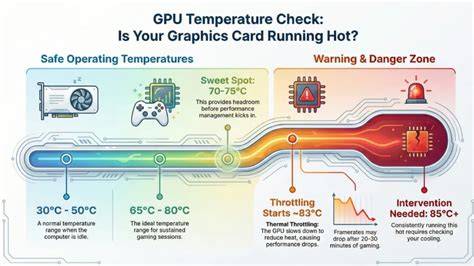
Monitoring temperature, power, and clock speeds helps prevent thermal throttling and prolongs hardware life. A stable thermal environment can enable consistent performance under sustained workloads like gaming, rendering, or hobbyist mining.
Key Metrics to Track
- GPU core temperature and VRAM temperatures
- GPU power draw (W) and fan speed (%)
- CPU temperatures, package power, and socket thermals
- System-wide temperatures and fan curves
- Clock speeds and utilization under load
- Thermal throttling indicators and error logs
When comparing software, look for compatibility with your hardware, ease of use, live telemetry, and the ability to export data for later analysis. Some tools excel at gaming overlays, while others focus on detailed sensor dashboards for enthusiasts and professionals.
Common Tools and Their Strengths
- HWiNFO: Comprehensive sensor coverage for CPUs, GPUs, and motherboard components; excellent for AMD platforms.
- Hwmonitor: Lightweight monitoring with broad hardware compatibility; straightforward dashboards.
- MSI Afterburner: Great for GPU overclocking and real-time monitoring with on-screen display.
- Open Hardware Monitor: Open-source option with extendable sensor support.
- AIDA64: Deep hardware analysis and benchmarking alongside temperature and power tracking.
Choosing the right tool often comes down to how you prefer to view data-real-time overlays during gaming, detailed logs for post-analysis, or alert-based notifications when temperatures rise above a threshold.
Practical Setup Tips
- Install a reliable monitoring tool and verify that it reads all relevant sensors on your setup.
- Configure temperature alerts to warn you before critical levels are reached.
- Calibrate fan curves to balance noise and cooling effectiveness.
- Cross-check readings with multiple tools if you suspect sensor anomalies.
- Record performance data during typical workloads to understand baseline behavior.
For AMD CPUs, HWiNFO's sensor list often proves indispensable, but combining it with a GPU-focused tool can provide a complete picture of system health during demanding tasks.
Nvidia RTX GPU: How to Show CPU & GPU Usage
In practice, a balanced approach-reliable software, sensible cooling, and informed monitoring-helps you maintain steady performance without surprises. Even mid-range coolers can effectively handle modern CPUs when paired with proper case airflow and a reasonable overclock strategy.
tags: #graphic #card #monitoring #software