WebP is a raster image format developed by Google with the aim of replacing JPEG, PNG, and GIF on the web, offering both lossy and lossless compression, animation, and alpha transparency. Google announced the WebP format in September 2010; the first stable supporting library was released in April 2018. After acquiring On2 Technologies in September 2010, Google continued to develop WebP as a web-optimized image format built on VP8 technology. In October 2011, Google expanded WebP to support frame-by-frame animation, a feature previously associated mainly with GIF.
On November 18, 2011, WebP gained 24-bit alpha channel support, enabling transparent images comparable to PNG. The format is containerized in RIFF (WebP RIFF) and includes both VP8 (lossy) and VP8L (lossless) encoding paths, with the lossless branch designed by Google engineer Jyrki Alakuijala. WebP’s container supports additional metadata, tiling for large images, ICC profiles, and Exif data, expanding its utility beyond simple image storage. The reference implementation comprises a command-line tool (cwebp) and a decoding library, mirroring the WebM project’s approach.
WebP’s compression relies on block prediction and transforms to reduce redundant data. It uses four block-prediction modes-horizontal, vertical, DC, and TrueMotion-and applies a 4×4 sub-block transform (Discrete Cosine Transform or Walsh-Hadamard) with fixed-point arithmetic to minimize numerical errors. Lossy WebP is particularly efficient for photographs, while lossless WebP leverages dedicated entropy codes and color caches to achieve compression without altering color data. This distinction makes PNG a natural benchmark for lossless content like logos and infographics, while WebP can offer smaller file sizes across diverse image types.
Early browser support for WebP varied, with notable holdouts such as Apple’s Safari. By March 2021, about 93.3% of web browsers supported WebP, reflecting growing adoption across major platforms. WebP is Open Source, allowing broad collaboration and improvements from the community. Modern image editors, including Photoshop (native support since version 23.2) and WordPress (native support from WordPress 5.8 “Tatum” in 2021), have integrated WebP interoperability, often with fallbacks for older browsers via plugins. WebP is designed to be a drop-in replacement for older formats, enabling both conversion of existing images and creation of new WebP assets from standard formats like JPEG and PNG.
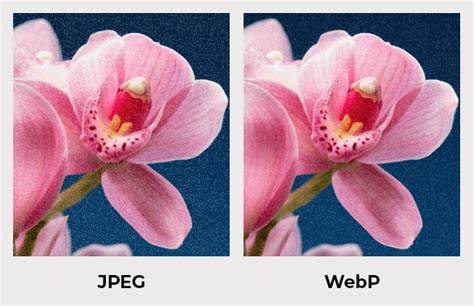
In practice, WebP images are typically smaller than their JPEG counterparts at comparable quality, though compression settings do not map one-to-one between formats (e.g., a 50% quality WebP is not equivalent to a 50% quality JPEG). The format’s lossy mode exploits predictive coding to approximate pixel colors, while its lossless mode preserves exact color information. The result is faster-loading web pages due to smaller image sizes, with the ability to display high-quality visuals and transparent backgrounds where needed. WebP’s development has been accompanied by ongoing enhancements and occasional security considerations, including notable vulnerabilities identified in 2023 related to the libwebp library and corresponding mitigations across Chromium-based browsers.
Thus, while Google did not “invent” WebP alone in a single moment, the core direction and ongoing refinement stem from Google’s acquisition of On2 Technologies and the leadership of Google engineers, notably Jyrki Alakuijala, in designing and implementing WebP’s lossless and lossy algorithms. The combined efforts culminated in a practical, widely adopted image format that aims to accelerate the web by reducing image file sizes without sacrificing essential visual fidelity.
Key milestones in WebP’s development
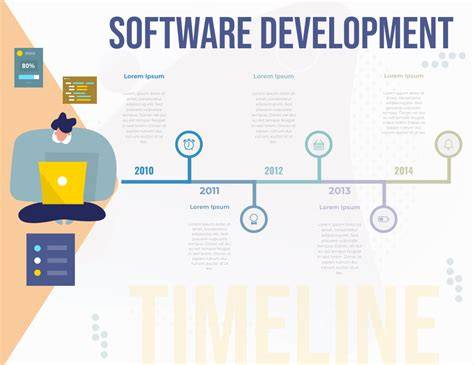
- September 2010: Google acquires On2 Technologies, initiating development of a web-optimized image format.
- April 2018: First stable WebP supporting library released.
- October 2011: WebP gains animation support, expanding beyond static images.
- November 18, 2011: WebP adds 24-bit alpha channel for transparency.
- March 2021: Approximately 93.3% of browsers support WebP.
- 2020: Safari adds WebP support on iOS and macOS with updates to Safari.
Transitioning to WebP often involves updating tooling and CMS configurations, but modern editors and platforms increasingly natively support WebP, with fallbacks as needed for older environments. WebP’s open-source nature encourages continued improvements and compatibility, ensuring it remains a competitive choice for image delivery on the web.
What is WebP?
Practical implications and usage
WebP supports both lossy and lossless compression, animation, and alpha transparency, making it suitable for a wide range of web graphics. It is especially advantageous for photographic content due to its efficient lossy compression, while lossless WebP is useful for logos and illustrations with flat color areas. For developers, WebP can reduce bandwidth usage and improve page load times, contributing to better user experience and potential performance SEO benefits.
Example: converting existing PNGs and JPEGs to WebP can yield notable file-size reductions, though actual results depend on image content and chosen compression settings. Modern browsers render WebP images seamlessly, provided the user’s environment supports WebP or a fallback mechanism is in place. The ecosystem continues to evolve with improvements to encoders, decoders, and tooling across platforms and creators’ software suites.
- Identify images that would benefit from WebP’s compression capabilities.
- Configure CMS or pipelines to serve WebP with fallbacks for older browsers.
- Test image quality across devices and network conditions to optimize settings.