Adobe Photoshop is a proprietary raster graphics editor developed and published by Adobe for Windows and macOS. It edit and compose raster images in multiple layers and supports masks, alpha compositing and several color models. Photoshop uses its own PSD and PSB file formats to support these features. In addition to raster graphics, Photoshop has limited abilities to edit or render text and vector graphics (especially through clipping path for the latter), as well as 3D graphics and video.
Photoshop’s naming scheme was initially based on version numbers. However, in October 2002 (following the introduction of Creative Suite branding), each new version of Photoshop was designated with "CS" plus a number; e.g., the eighth major version of Photoshop was Photoshop CS and the ninth was Photoshop CS2. Photoshop CS3 through CS6 were also distributed in two different editions: Standard and Extended. Alongside Photoshop, Adobe also develops and publishes Photoshop Elements, Photoshop Lightroom, Photoshop Express, Photoshop Fix, Adobe Illustrator, and Photoshop Mix.
Photoshop was developed in 1987 by two brothers, Thomas and John Knoll, who sold the distribution license to Adobe Systems Incorporated in 1988. Thomas Knoll, a Ph.D. student at the University of Michigan, began writing a program on his Macintosh Plus to display grayscale images on a monochrome display. This program (at that time called Display) caught the attention of his brother John, an Industrial Light & Magic employee, who recommended that Thomas turn it into a full-fledged image editing program. Thomas took a six-month break from his studies in 1988 to collaborate with his brother on the program. During this time, John traveled to Silicon Valley and gave a demonstration of the program to engineers at Apple Computer and Russell Brown, art director at Adobe. Both showings were successful, and Adobe decided to purchase the license to distribute in September 1988.
Photoshop 1.0 was released on February 19, 1990, for Macintosh exclusively. The Barneyscan version included advanced color editing features that were stripped from the first Adobe shipped version. The handling of color slowly improved with each release from Adobe and Photoshop quickly became the industry standard in digital color editing. When Photoshop 1.0 was released, digital retouching on dedicated high-end systems cost around $300 an hour for basic photo retouching. Photoshop was initially only available on Macintosh. In 1993, Adobe chief architect Seetharaman Narayanan ported Photoshop to Microsoft Windows.
Photoshop files have default file extension as .PSD, which stands for "Photoshop Document". A PSD file stores an image with support for all features of Photoshop; these include layers with masks, transparency, text, alpha channels and spot colors, clipping paths, and duotone settings. This is in contrast to many other file formats that restrict content to provide streamlined functionality. From the beginning, Photoshop could save files in other formats, including TIF, JPEG, and GIF. These files are smaller than PSD files because they lack editable features of a PSD file. Photoshop can also create and use files with the extension .PSB, which stands for "Photoshop Big" (also known as "large document format"). A PSB file extends the PSD file format, increasing the maximum height and width to 300,000 pixels and the size limit to around 4 exabytes.
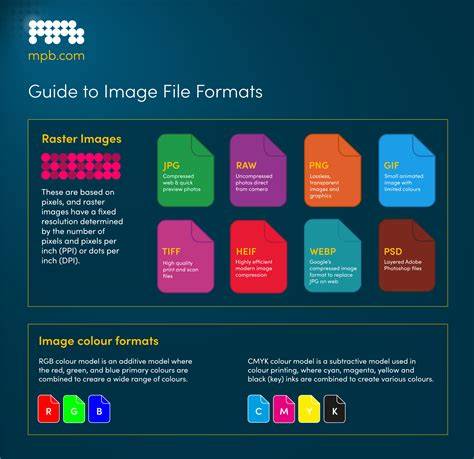
Because of Photoshop's popularity, PSD files are widely used and supported to some extent by most competing software, including GIMP, Affinity Photo, and Clip Studio Paint. Photoshop functionality can be extended by add-on programs called Photoshop plugins (or plug-ins). Adobe creates some, such as Adobe Camera Raw, but most are developed by third-parties. There are various types of plugins, such as filter, export, import, selection, color correction, and automation. The most popular plugins are the filter plugins, available under the Filter menu in Photoshop. Filter plugins can either modify the current image or create content. Photoshop and derivatives such as Photoshopped have become verbs that are sometimes used to refer to images edited by Photoshop, or any image manipulation program.
The same happens not only in English but as the Portuguese Wikipedia entry for image manipulation attests, even in that language, with the trademark being followed by the Portuguese verb termination -ar, yielding the word "photoshopar" (to photoshop). Photoshop’s naming scheme was initially based on version numbers, from early pre-release builds and version 1.0 through version 7.0.1. Photoshop 2.0 was released in June 1991. Photoshop 3.0 was released in September 1994 for Mac OS 7; the Windows version came out later in November. The first Photoshop CS was commercially released in October 2003 as the eighth major version of Photoshop. Photoshop CS increased user control with a reworked file browser augmenting search versatility, sorting and sharing capabilities and the Histogram Palette which monitors changes in the image as they are made to the document.
Photoshop CS2, released in May 2005, expanded on its predecessor with a new set of tools and features. It included an upgraded spot healing brush and introduced non-destructive editing and 32-bit HDR image support. CS2 brought the vanishing point and image warping tools. Camera Raw version 3.0 allowed settings for multiple raw files to be modified simultaneously. The CS2 interface was streamlined for easier access to features in specific contexts.
CS3 and CS3 Extended appeared in April 2007, offering a stand-alone option or as part of Creative Suite. CS3 introduced a streamlined interface, improved support for Camera RAW, more than 150 RAW formats, and enhanced printing options via Adobe Bridge. The Clone Source palette added more options to the Clone Stamp tool. CS3 Extended included 3D, video, and measurement tools with DICOM support.
CS4 and CS4 Extended appeared on October 15, 2008, with a tab-based interface and smoother panning and zooming; CS4 introduced a 3D engine for converting gradient maps to 3D objects and a ray-tracing renderer for print-quality output. CS4 Extended added scientific imaging, 3D, motion graphics, analysis tools, and high-end video capabilities.
In May 2011, CS5 and CS5 Extended arrived, introducing Content-Aware Fill, Refine Edge, Mixer Brush, Bristle Tips and Puppet Warp. CS5 Extended added 3D and advanced video features, a materials library, and the Shadow Catcher tool for enhanced 3D objects. CS5 and CS5 Extended were offered as standalone or as part of Creative Suite 5.
Photoshop CS6 (2012) brought a redesigned interface focused on performance, new creative tools, video editing capabilities, and a straightening tool for reorienting images. Background saving allowed editing while documents were being saved. Windows XP support ended with version 13.1.3, making 13.0.1 the last XP-compatible release.
Photoshop CC (2013) moved to a Creative Cloud subscription model, with major features like Smart Sharpen, Intelligent Upsampling, and Camera Shake Reduction. Subsequent updates added Generator, a node-based plug-in platform, and features across multiple releases, including CC 2014, CC 2015, CC 2017, CC 2018, and CC 2019, each expanding content-aware tools, focus masking, brush improvements, and performance enhancements.
Photoshop 2020 (version 21) introduced object selection improvements, a more capable properties panel, enhanced transform warp, new shortcuts, content-aware fill improvements, animated GIF support, and improved lens blur. It also added OpenType font features, as well as the ability to convert smart objects to layers and adjust 32-bit layers. The iPad version launched in 2019, bringing PSD compatibility and cloud document syncing to a touch-first experience, with ongoing feature parity planned over time.
Today, Photoshop remains part of Adobe Creative Cloud and is used by novices and professionals to create images, graphics, and sometimes 3D artwork. Its name has even become a verb in everyday language, reflecting its cultural impact on digital imaging. Photoshop is a powerful tool for retouching, compositing, and editing photos and graphics, though it is not primarily a drawing or standalone design program; vector work is better served by Illustrator, and some tasks are approached with other specialized tools.
Photoshop is widely used in business to produce social media graphics, marketing materials, web graphics, and branding assets. Its versatility is complemented by a broad ecosystem of plugins and AI-powered features, such as the Generative Fill and other Firefly-powered capabilities that assist editing, expansion, upscaling, and harmonization. In competition, tools like Affinity, Canva, GIMP, Midjourney, Procreate, Sketch, and others offer various strengths, from cost models to AI-assisted workflows and platform-specific advantages.
10 Ways AI Transformed My Photoshop Techniques!
Key features include: layers and masks, non-destructive editing, content-aware tools, AI-driven enhancements, and expansive file format support. The software integrates with other Creative Cloud apps like InDesign and Lightroom, enabling cross-project workflows and asset sharing.
In business contexts, Photoshop enables the creation of social media graphics, video-related design work, product mockups, and marketing collateral, while also supporting collaboration through cloud documents and shared libraries. It remains a dominant force in digital imaging due to its depth, flexibility, and continuous evolution through AI integration and cloud-era features.
Users can start with basic image edits, then progress to complex compositing, color correction, and advanced retouching, all while leveraging a vast library of brushes, presets, and plugins. As a result, Photoshop has become an essential tool for photographers, designers, marketers, and developers alike, shaping modern visual content creation.