PricingDive deep into the color ivory. Find color palettes, get the codes for adding ’em to your designs-explore your color-dreaming heart out. Ivory color codes Nail the exact color ivory in your design by using the code from any one of these systems for color identification.
Understanding Ivory in Digital and Print
If you're identifying color for pretty much anything digital, you're working in an RGB colorspace. If the project you're working on requires percentage representation, ivory is made of 100% red, 100% green, and 94% blue.
If you're identifying color for a print project, you're most likely using a CMYK colorspace-the percentages are 0% cyan, 0% magenta, 6% yellow, 0% black.
Basic Color Codes for Ivory
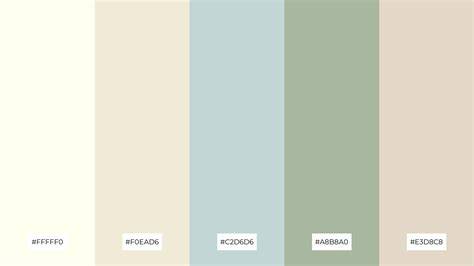
Ivory color codes show how the tone translates across systems. The commonly cited hex code for ivory is #FFFFF0, with RGB values of (255, 255, 240) and HSV/HSL representations around h: 60°, s: 100%, l: 97% and h: 60°, s: 6%, v: 100% respectively. In CMYK terms, ivory approximates to C: 0%, M: 0%, Y: 6%, K: 0%.
Note: The CMYK representation is an approximation when converting to or from CMYK for digital displays. The hex and RGB values are intended for screen use, while CMYK serves printing workflows.
Ivory Color Palettes and Harmonies
Complementary, Split-Complementary, Triadic, Tetradic, Analogous, Monochromatic - ivory offers a versatile base for many color schemes. As a neutral shade, ivory pairs easily with a wide range of hues, from navy blue to maroon, gold to charcoal, and beyond.
Practical Uses in Design
Ivory’s warmth makes it a softer alternative to pure white, ideal for UI depth, readability, and a calm aesthetic. It adds a touch of elegance and can convey luxury and sophistication in branding, packaging, and web design.
In a print context, ivory tones influence paper choice, ink density, and perceived warmth of the final piece. When used in combination with gold accents or deep blues, ivory can elevate a design toward refined luxury.
Variants and Related Tones
Ivory sits near off-white family colors. Variants include Cream (#FDFBD4), Beige (#EDE8D0), Champagne (#F7E6CA), and Off-white (#F2F0EF). Each variant maintains the general warmth and calmness while shifting slightly in saturation or tint.
Color Psychology and Cultural Considerations
Ivory symbolizes elegance, warmth, purity, and tranquility. Its associations with luxury can impact branding choices, while cultural contexts may shift its perceived meaning-conduct regional color research for global projects.
Practical Guidance for Designers
Accessibility matters: ensure sufficient contrast when ivory is used for text or UI elements. Consider pairing ivory with dark navy, charcoal, or rich gold for legibility and sophistication.
When combining ivory with other colors, think about depth and warmth. Use ivory to create subtle depth, soften stark whites, or provide a welcoming neutral backdrop for imagery and typography.
Specific Ivory CMYK and Hex References
Hex: #FFFFF0; RGB: 255, 255, 240; CMYK (approximate): 0, 0, 6, 0; HSL: 60°, 100%, 97%; HSV: 60°, 6%, 100%.
Ivory CMYK values are often cited as (0, 0, 6, 0) with variations depending on printing process and paper stock. The hex representation used for digital media remains #FFFFF0 or the related slightly warmer approximation around #FFFDE3 in some references.
Ivory color palettes and patterns can be explored in palettes labeled under Complementary, Analogous, Monochromatic, and more, with patterns like Gingham Checks, Vertical Waves, and Leaves that can complement ivory’s warm neutrality.
Practical Palette Examples
- Complementary pairing: ivory with navy blue for a classic, high-contrast look.
- Analogous harmony: ivory, cream, and beige for a soft, cohesive palette.
- Luxurious accents: ivory with gold and deep burgundy for an upscale aesthetic.
Visualizing Ivory
To help you plan color usage, consider the following color relationships and their practical implications in design projects. The ivory family blends well with both light and dark elements, enabling flexible typography and imagery choices.
Color Modes in Printing and Graphic Design | CMYK, RGB, Hex, and PMS
| Color Space | Example Values | Notes |
|---|---|---|
| Hex | #FFFFF0 | Standard ivory on screens |
| RGB | R255 G255 B240 | Direct digital use |
| CMYK | C0 M0 Y6 K0 | Print approximation |
| HSL | H60 S100% L97% | Color space for design tools |
Ivory remains a versatile neutral that adapts to both minimalist and luxurious design contexts, offering warmth without overpowering other elements in a composition.