In this article, we’ll look at Midjourney AI’s rules and the list of words that aren’t allowed. One must be familiar with the Midjourney AI’s rules of conduct before implementing them. Midjourney enforces strict content guidelines to maintain a safe, respectful, and inclusive environment for all users. This guide covers everything you need to know about these prohibited terms, why they exist, and how to navigate the platform without triggering filters.
Why Midjourney bans certain words
Midjourney's primary goal is to provide a creative space that adheres to PG-13 standards, ensuring the platform remains suitable for users of all ages. Midjourney bans certain words for the following reasons: Prevent Harmful Content, Promote Inclusivity, Avoid Misuse, and Ensure Ethical Use. Midjourney also collaborates with industry regulators to refine its filters and stay ahead of evolving threats. Understanding Midjourney’s banned word list is essential for a smooth and enjoyable user experience.
Overview of the banned word categories
Midjourney’s banned words fall into several categories, ranging from violence and adult content to discriminatory terms and drug references. Below are the main groups and representative examples, illustrating why these terms are restricted and how they affect image generation:
- Gore and Violence-Related Words - Examples include Blood, Bloodbath, Crucifixion, Flesh, Decapitate, Cannibalism, Slaughter, Vivisection, Massacre, Wound. These terms often lead to graphic content that violates community guidelines.
- Adult and Explicit Content Words - Includes Erotic, Hardcore, Hentai, Seductive, BDSM, Playboy, Rule34, Boudoir, Pleasure, Smut. Blocking these terms helps keep the platform appropriate for all ages.
- Body Parts and Vulgar References - Terms like Nipple, Penis, Vagina, Breasts, Booty, Organs (in vulgar context), Crotch, Phallus, Busty. Euphemisms or alternative descriptions are encouraged to stay compliant while preserving creativity.
- Drug-Related Words - Words such as Marijuana, Cocaine, Heroin, Meth, LSD, Opium, Ecstasy, Psychedelic (in some contexts). These terms are restricted to prevent glamorization or promotion of drug use.
- Hate Speech and Discriminatory Terms - Nazis, Fascist, Coon, Honkey, Offensives stereotypes, Racial slurs. The policy enforces zero tolerance for hate speech, racism, or discrimination.
- Clothing and Nudity-Related Words - Lingerie, Bare chest, No clothes, Risqué, Transparent, Skimpy, Naked, Barely dressed. Alternatives like "elegant attire" or "beachwear" are encouraged.
- Deepfake and Misinformation Words - Deepfake, AI-generated porn, Fake celebrity, Manipulated, Impersonation, Uncensored, Altered image. These restrict terms aim to protect individuals from unauthorized portrayal and misleading content.
How the rules affect prompting and image generation
When you input a prompt, Midjourney scans your words using automated filters and AI moderation. If a banned word is detected, the prompt is automatically rejected or a warning is issued. Repeated attempts to bypass the filters can lead to account consequences, including temporary suspension or permanent bans. The AI model is trained to avoid generating content related to prohibited topics even if a prompt slips through initially.
To maintain safety, Midjourney also analyzes context and intent behind prompts. Even if your prompt doesn’t contain explicit banned words, it can still be flagged if it has potential for harmful or inappropriate content. The platform allows an appeals process for rejected prompts, where users can provide context and explain intent.
Practical strategies for compliant prompts
Ethical navigation of the filter involves crafting prompts that convey your idea without triggering restrictions. Here are practical strategies:
- Use synonyms or alternative phrasing to avoid banned terms.
- Rephrase prompts to express meaning without restricted vocabulary.
- Utilize metaphors and descriptive but non-explicit language.
- Check for any terms that could be linked to restricted categories and replace them with safe equivalents.
- Stay updated with official and community updates on word lists, since bans evolve over time.
What to do if a prompt is blocked or flagged
If your prompt is blocked, review your wording and try substitutions or paraphrasing. You can also appeal if you believe your use case is legitimate and non-harmful. Midjourney’s moderation team and community channels provide avenues for feedback and adjustments to the word list. Community involvement includes reporting inappropriate content and suggesting changes to the list, contributing to a safer platform for all creators.
Impact of AI-generated content and regulatory considerations
The rise of AI-generated content has raised concerns about misuse, including deepfakes and non-consensual imagery. Midjourney’s filters are a proactive measure to combat these issues and protect users. Governments and tech companies are increasingly working together to regulate AI-generated content and ensure platforms remain safe and ethical spaces. Midjourney collaborates with regulators to refine filters and address evolving threats, balancing creative freedom with safety.
Tips for staying compliant while maintaining creativity
1) Be conscious of language; avoid explicit adult content, violent imagery, or harassing terms. 2) If a word is banned, replace it with a suitable synonym or safer alternative. 3) Use rephrasing or metaphors to convey concepts without restricted terminology. 4) Regularly review the list of banned words and stay informed about updates. 5) Do not attempt to “game” the filter; persistent attempts can lead to a ban.
About the Midjourney moderation ecosystem
Midjourney employs automated word filters and AI content moderation, supplemented by user reports and an appeals process. Prompt rejection, potential account consequences, and a robust policy help maintain a safe environment. The platform emphasizes community collaboration, with a collaborative and regularly updated banned words list and an appeals channel for contextual reviews. These mechanisms collectively support a safe, inclusive, and innovative space for AI-generated art.
Frequently asked questions
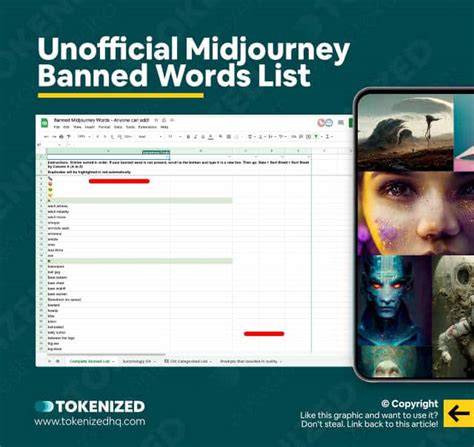
- Is there a public official Midjourney banned words list? No official public list exists; there are community reports and unofficial compilations, and terms change frequently.
- Does Midjourney allow NSFW or +18 content? No, NSFW content is blocked by platform filters.
- What words are not allowed in Midjourney? Categories include violence, sexual content, hate speech, drugs, explicit body parts, and other sensitive topics; exact word lists are updated over time.
- Can I use Midjourney in uncensored mode? No, there is no uncensored or filter-off mode.
- How often are banned words updated? They are updated regularly in response to trends, feedback, and changes in policy.
Examples of safe prompting and alternative phrasing
Instead of a restricted term, consider creative, non-explicit phrasing that preserves intent while staying within guidelines. For example, replace explicit descriptors with artistic, non-graphic descriptors and focus on mood, color, lighting, composition, and style rather than sensitive vocabulary.
Tables and data
Table: Categories and rationale (illustrative, based on platform guidance)
| Category | Rationale | Examples |
|---|---|---|
| Gore and Violence | Prevents graphic harm visuals | Blood, Slaughter, Decapitate |
| Adult Content | Maintains PG-13 environment | Erotic, Hentai, Boudoir |
| Body Parts | Avoids explicit or sexualized depictions | Nipple, Vagina, Breasts |
| Drugs | Prevents glamorization or promotion | Marijuana, Cocaine |
| Hate Speech | Zero tolerance for discrimination | Nazi, Slurs |
tags: #midjourney #banned #words