Midjourney prompts empower you to infuse authenticity and specificity into your visual content-allowing you to step beyond the realm of stock images. These AI-generated prompts are not just revolutionary-they’re pivotal in transforming digital storytelling. From social media to corporate slides, your ability to customize is now boundless. So, embrace the Midjourney revolution. Elevate your visuals, resonate with your audience, and let your content shine with unparalleled realism.
Understanding the core of Midjourney prompts
What exactly is a Midjourney prompt? Think of a prompt as your creative whisper to the Midjourney Bot. This brief text phrase becomes the muse, guiding the Bot to craft a distinctive image. The Bot then deconstructs these words into smaller segments termed ‘tokens.’ These tokens resonate with its foundational training, enabling the generation of rich, evocative visuals.
Prompt length matters. Longer prompts put you in control, while short prompts leave more to the AI. Basic prompts serve as quick sketches, whereas advanced prompts allow image URLs, multiple phrases, or fine-tuned parameters. The strength of your description can be a game-changer. Grammar isn’t the hero here; it’s the word vibes that count.
Additionally, Midjourney supports a variety of parameters to refine outputs, including aspect ratios, upscalers, and stylistic controls. With the 5.1 update, realism in AI imagery is now more effortless than ever. A mere nod to “photography” in your prompt often does the trick for a lifelike result.
Five core approaches to craft high-quality prompts
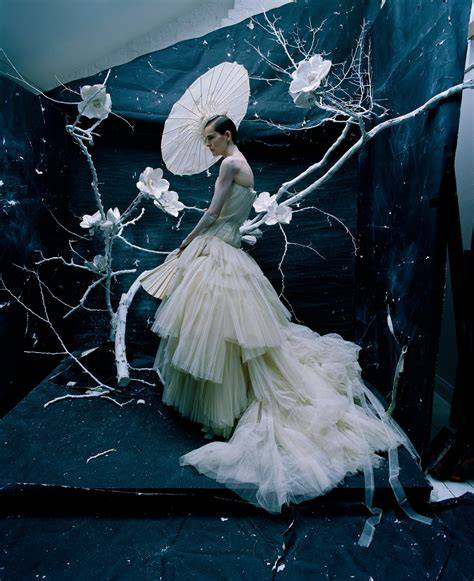
- Longer Prompts Put You in Control: If you write a longer descriptive prompt, you are in control. For example, a well-structured prompt like “Young man with shaved head, wearing black Adidas tracksuit and white t-shirt, standing in front of the camera in the style of Tim Walker, Fashion editorial photography outside, plain background, Fujicolor Superia X-TRA 400 - v 6.0 - style raw - ar 16:9” yields more intentional results than a terse line.
- Name Dropping and Style References: Including photographers, designers, or art movements can steer the aesthetic dramatically. Prompts like “Retro futuristic stubby aluminium sports car designed by William Towns, Giorgetto Giugiaro and Marcello Gandini for Braun” illustrate the power of reference-based prompts.
- Descriptive Style and Environment: Describing the style of photography (e.g., Editorial photography, documentary, fashion editorial) plus environment (outdoors, studio, urban setting) creates a convincing frame for the AI.
- Pose and Expression Language: Articulating poses, expressions, and hands positions adds dynamism. Keywords for poses include front view, profile view, over the shoulder, angled shoulders, and environmental portraits to integrate subject with surroundings.
- Lighting and Technical Details: Use lighting cues (silhouette, high key, low key, rim lighting, neon side lighting) and camera settings (ISO, aperture, shutter) to sculpt mood and depth. Even if Midjourney abstracts some of these terms, including them guides the AI toward your desired look.
Practical prompts and templates for distinct photographic goals
Below are structured prompts designed to cover a range of photography styles and use cases. Each prompt is crafted to maximize realism and cinematic quality while remaining adaptable to your own vision.
Editorial portrait prompts
Portrait with environment: “Environmental portrait of a man outdoors, natural lighting, soft shadows, foreground slightly blurred, subject in focus, wearing a casual blazer, 50mm equivalent, shallow depth of field, golden hour light, -v 6.0 -ar 4:5 -style raw”
Over-the-shoulder studio portrait: “A black and white studio portrait of a woman in Yohji Yamamoto-inspired minimalist attire, backlit, high contrast, shallow depth of field, 85mm lens, film-grain texture, -v 6.0 -style raw -ar 3:4”
Street and documentary prompts
High-energy candid street: “High-resolution candid street photography of a bustling city market, vibrant colors, dynamic composition, natural environmental lighting, 35mm focal length, shallow depth of field, filmic grain, -v 6.0 -style raw -ar 16:9”
Monochrome documentary: “Black and white documentary portrait of an elderly man with deep wrinkles, dramatic lighting, eye-level angle, stark contrast, 50mm lens, film stock texture, -v 6.0 -style raw -ar 4:5”
Lifestyle and product photography prompts
Product with context: “Fine dining food beautifully presented on a stoneware plate, warm ambient light, shallow depth of field, editorial styling, Kodak UltraMax 400 feel, -v 6.0 -ar 3:2”
Lifestyle shot in a modern space: “Professional shot of a man with laptop in a bright open-plan living room, natural light, casual business attire, 35mm, cinematic color grading, -v 6.0 -style raw -ar 16:9”
Landscape and nature prompts
Golden hour landscape: “Golden hour landscape of a serene lake, warm tones, soft light, expansive composition, wide-angle lens, high dynamic range feel, -v 6.0 -ar 16:9”
Macro and texture: “Macro photograph of a dew-covered spider web, intricate detail, sharp focus, diffused backlight, 100mm macro lens, natural color palette, -v 6.0 -style raw -ar 1:1”
Lighting techniques to elevate AI-generated photography
Natural lighting is your baseline. The right time of day can dramatically affect mood. Diffused lighting yields soft shadows and balanced exposure, ideal for portraits and still life. Rim lighting creates a glowing outline that adds depth and separation from the background. Neon side lighting injects urban vibrancy, perfect for night scenes or edgy portraits.
Remember: Midjourney often handles lighting implicitly, but adding explicit lighting cues sharpens control over the final result. For cinematic drama, combine lighting choices with camera angles and lens selections to sculpt atmosphere.
Camera angles and lenses: shaping mood and storytelling
Angles move the viewer through the scene. A low-angle shot emphasizes power and presence, while a high-angle shot conveys vulnerability or detachment. Wide-angle shots establish context and environment, but extreme wide angles risk distortion near edges. Overhead or bird’s-eye views reveal patterns and spatial relationships, useful in architecture or landscape storytelling. Close-ups capture emotion and detail, drawing the viewer into the subject’s expression.
Lenses have a similar storytelling function. A 50mm “normal” lens offers natural perspective with pleasing compression. Portraits benefit from 85mm to 135mm ranges for flattering perspective and flattering background blur. For environmental portraits or architecture, wide angles (24mm-35mm) establish space and context.
Brand and film choices to influence color and grain
Cameras and film simulations shape color science and texture. Example prompts explore brand-specific aesthetics, such as “shot with Arri Alexa” for cinematic color and dynamic range, or “shot with Nikon” for sharpness and natural tones. Film stock emulation influences grain, contrast, and color palette; consider Fujifilm Pro 400H for pastel skin tones or Kodak Ektachrome E100 for vibrant landscapes with high color pop. Each choice subtly alters the final look, guiding the AI toward recognizable filmic or digital aesthetics.
Practical prompt template for consistent results
Template: [Photography/Film Type], [Subject], [Unique Features] -[Technical Specs]
Example: “Editorial portrait, woman in natural light, candid pose, 50mm lens, shallow depth of field, warm color grade, -v 6.0 -ar 4:5 -style raw”
Notes on limits and iteration
- Results may vary between generations; consistency improves with clear, repeatable prompts and reference styles.
- AI limitations persist; prompts guide the AI, but not every nuance of real photography can be perfectly replicated.
- For posterity, document your prompts and settings to reproduce or iteratively refine an image family.
Mini gallery ideas: how to structure prompts for varied outputs
To illustrate the versatility of prompts, you can generate imagery across genres such as:
- High-resolution candid street photography
- Black and white studio portraits with dramatic lighting
- Golden-hour landscapes with warm tones
- Macro textures of natural subjects
- Editorial fashion shoots with environmental context
Midjourney prompts empower you to infuse authenticity and specificity into your visual content-allowing you to step beyond the realm of stock images. These AI-generated prompts are not just revolutionary-they’re pivotal in transforming digital storytelling.
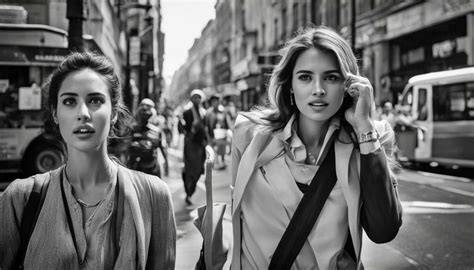
5 Tips for Street Photography Composition with Phil Penman
Ключевые элементы и примеры для быстрого старта
Use longer prompts for control, add style references for mood, describe poses and lighting, and apply camera settings to guide the generation. Start with a clear subject, place, and mood, then layer details such as lens type, film feel, and aspect ratio. Practicing with a set of repeatable templates helps achieve professional consistency while still allowing creative exploration.
tags: #midjourney #prompts #for #photography