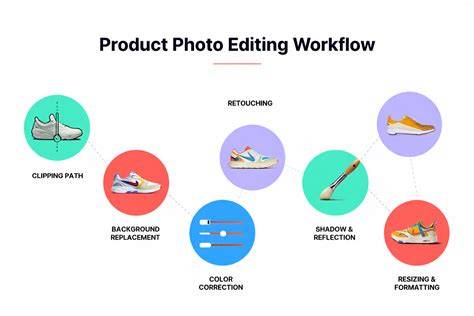
In today’s fast-paced online marketplace, ecommerce product photo editing services play a crucial role in helping brands present products professionally and stand out in a competitive environment. Advanced technologies such as AI image processing further enhance efficiency and image quality, enabling scalable operations. In eCommerce, product images often serve as the first point of interaction between a brand and potential customers, and high-quality edited visuals can significantly influence purchasing decisions.
Why product photo editing matters for online sales
Raw product photos frequently contain issues such as poor lighting, inconsistent backgrounds, or inaccurate colors, which can affect how customers perceive the product. When evaluating product photo editing services, it’s important to focus on features that help improve image quality, maintain brand consistency, and support scalable ecommerce operations. The goal is professional, consistent, and optimized visuals that boost conversions and reduce returns.
High-quality product visuals attract attention, build trust, and help drive conversions. The world’s leading ecommerce platforms emphasize true-to-life colors and clean presentations, reinforcing why capsule services exist to deliver reliable, marketplace-ready imagery. In practice, businesses can choose from a wide range of ecommerce product photo editing services-from basic background removal and color correction to advanced retouching and large-scale image processing.
Overview of leading product photo editing service providers
- DIGI-TEXX provides professional ecommerce product photo editing services for brands, retailers, photographers, and catalogs, covering basic cleanup to advanced retouching and bulk processing.
- Pixelz combines AI-assisted workflows with human editors for scalable image editing, offering tiers such as Solo, Professional, and Enterprise with transparent pricing.
- PicsMatic offers product photo editing for ecommerce sellers and marketplaces, with pricing based on project requirements.
- SmartPHOTOeditors specializes in consistent product presentation across stores, marketplaces, catalogs, and marketing materials, with varying pricing by project.
- Edit Bulk focuses on bulk photo editing for photographers, ecommerce businesses, retailers, and agencies, with custom pricing per project.
- FixThePhoto provides product photo retouching, background removal, color correction, and advanced edits, serving photographers and ecommerce clients worldwide with flexible pricing.
- PixelPhant concentrates on ecommerce retouching for fashion and studios, offering basic to complex edits with per-image pricing and fast turnarounds.
- WeEdit.Photos delivers color correction, background removal, and product image retouching with affordable per-image packages and discounts for returning customers.
Each provider emphasizes different strengths-from speed and scale to bespoke human retouching and brand-aligned color fidelity. The choice depends on catalog size, product category, required consistency, and budget constraints.
Technology vs. human expertise: hybrid workflows
The ecommerce landscape is evolving quickly as AI-powered tools enable faster, scalable editing-covering background removal, smart cropping, image enhancement, and retouching. However, automation alone cannot fully replace human expertise; AI can over-edit textures, distort shapes, or create unrealistic colors, potentially eroding customer trust. A hybrid approach-where technology speeds workflows while skilled editors ensure quality and brand consistency-appears to be the dominant trend for reliable ecommerce image production.
Key benefits of hybrid workflows include faster processing of large catalogs, standardized outputs, and the ability to preserve nuanced brand aesthetics. The collaboration between automated pipelines and senior retouchers helps maintain consistency across PDPs and marketing assets while meeting tight deadlines.
Practical considerations when selecting a service
- Turnaround time and scalability: Projects range from rapid 24-hour rushes to multi-day cycles depending on volume and complexity.
- Pricing model: Options include per-image rates, monthly subscriptions, bulk discounts, or custom quotes based on volume and requirements.
- Editing scope: Basic color correction and background removal versus advanced retouching, ghost mannequin effects, clipping paths, and strategic color grading.
- Brand alignment: The ability to enforce brand guidelines, color consistency, and PDP-wide visual identity across platforms.
- Quality control: AI-assisted checks with human QA review to ensure accuracy before delivery.
In addition, some providers offer end-to-end features such as AI-assisted image generation, background replacement, and platform-specific optimizations to ensure compliance with marketplaces like Amazon and Shopify.
Representative features across services
- Background removal and white background standardization for marketplace compliance.
- Color correction and color matching across multiple images to ensure consistency.
- Ghost mannequin effects and clipping paths to showcase product structure and details.
- Shadows, reflections, and depth enhancements to achieve realistic presentation.
- Edge refinement, texture sharpening, and noise reduction for premium quality.
- Batch processing, cloud uploads, and mobile-friendly submission for convenience.
Pricing and deliverables: a snapshot
Pricing varies widely by provider and service tier. For example, per-image rates can range from under $1 to several dollars, with higher-tier edits commanding premium pricing. Some services offer custom pricing for bulk orders, while others provide transparent per-image pricing with optional subscriptions. Turnaround times and the availability of rush options also differ across vendors.
Key questions and practical guidance
- How long does a typical project take? Typical turnarounds span from 12 to 48 hours for standard edits, with expedited options available in many services.
- Is outsourcing cost-effective compared to in-house editing? Outsourcing can reduce expenses related to hiring, training, and software, especially for large catalogs.
- Can AI handle basic edits? Yes, but for detailed manual work like fine skin retouching or stray hair cleanup, professional editors are essential.
High-quality product visuals strengthen brand consistency, improve click-through rates, and increase conversions. As AI-driven tools grow more capable, the optimal approach blends automated efficiency with human oversight to maintain trust, accuracy, and a premium shopping experience.
Tables and practical data from the material
| Provider | Focus | Typical Pricing Cue | Turnaround (typical) |
|---|---|---|---|
| DIGI-TEXX | Basic cleanup to advanced retouching | Custom | 12-48 hours |
| Pixelz | AI-assisted + human editors; scalable | Solo from $1.45/image; Pro from $0.95/image | Variable by plan |
| PicsMatic | Product images for marketplaces | Custom pricing | Depends on project |
| WeEdit.Photos | Color correction, background removal | $0.20-$10 per image | Depends on package |
Choosing the right ecommerce photo editing partner depends on catalog size, product category, required consistency, and budget. In all cases, investing in professional product photo editing is a driver of trust, brand integrity, and higher conversions.